
Last updated October 15, 2026
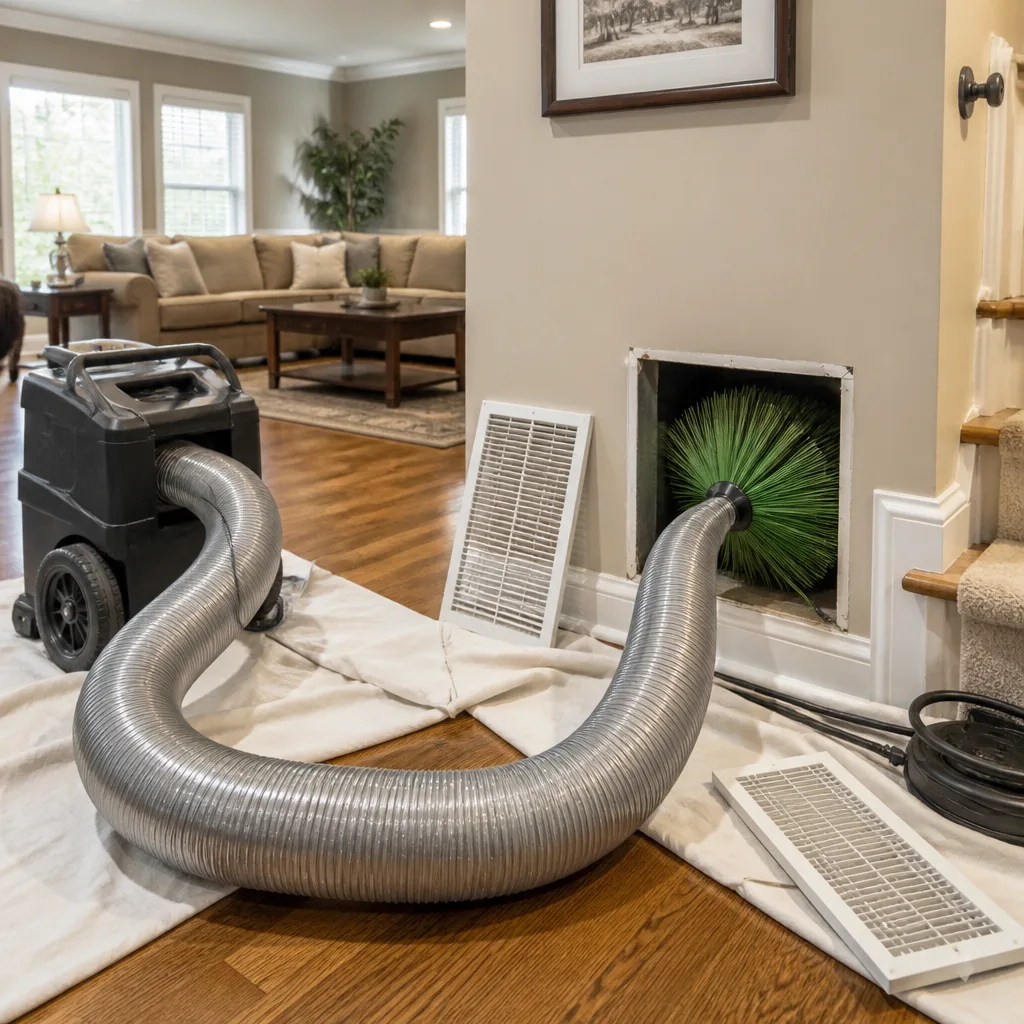 Whole-home duct cleaning
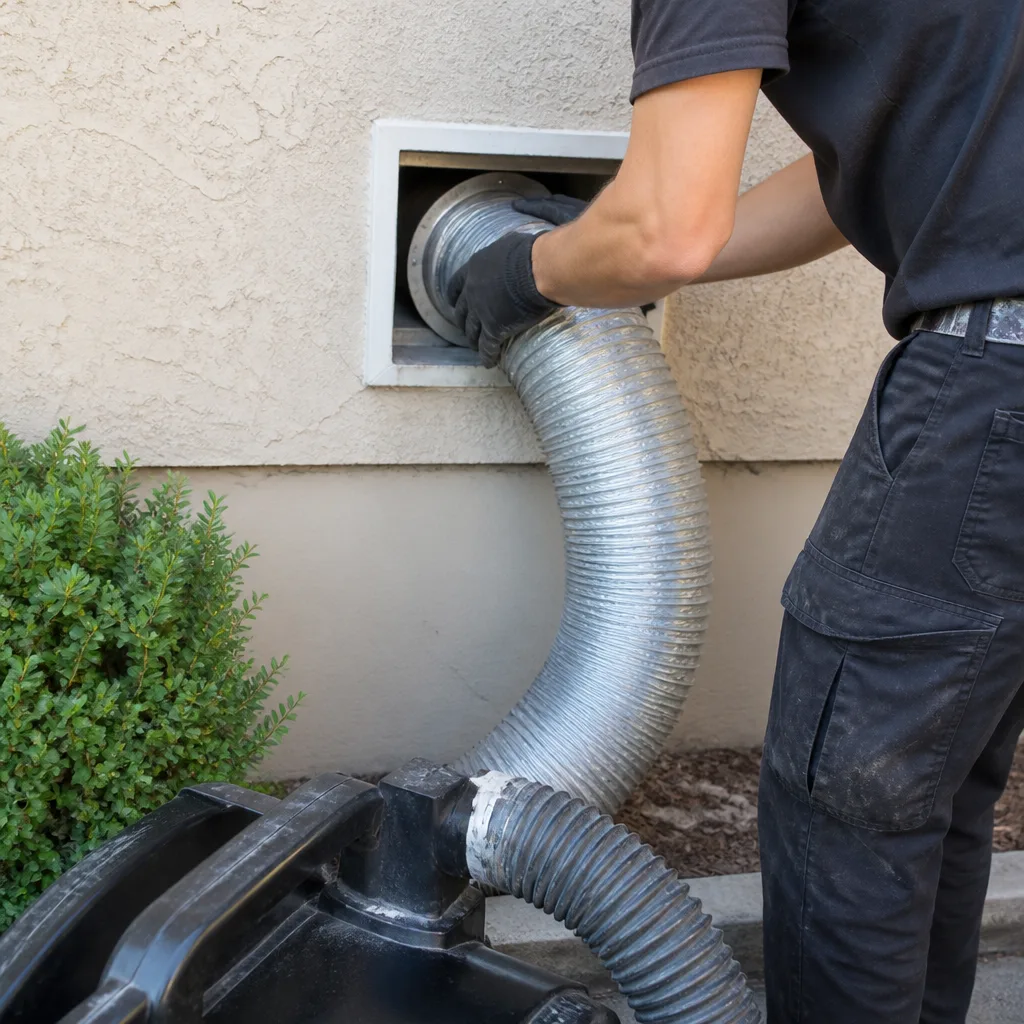
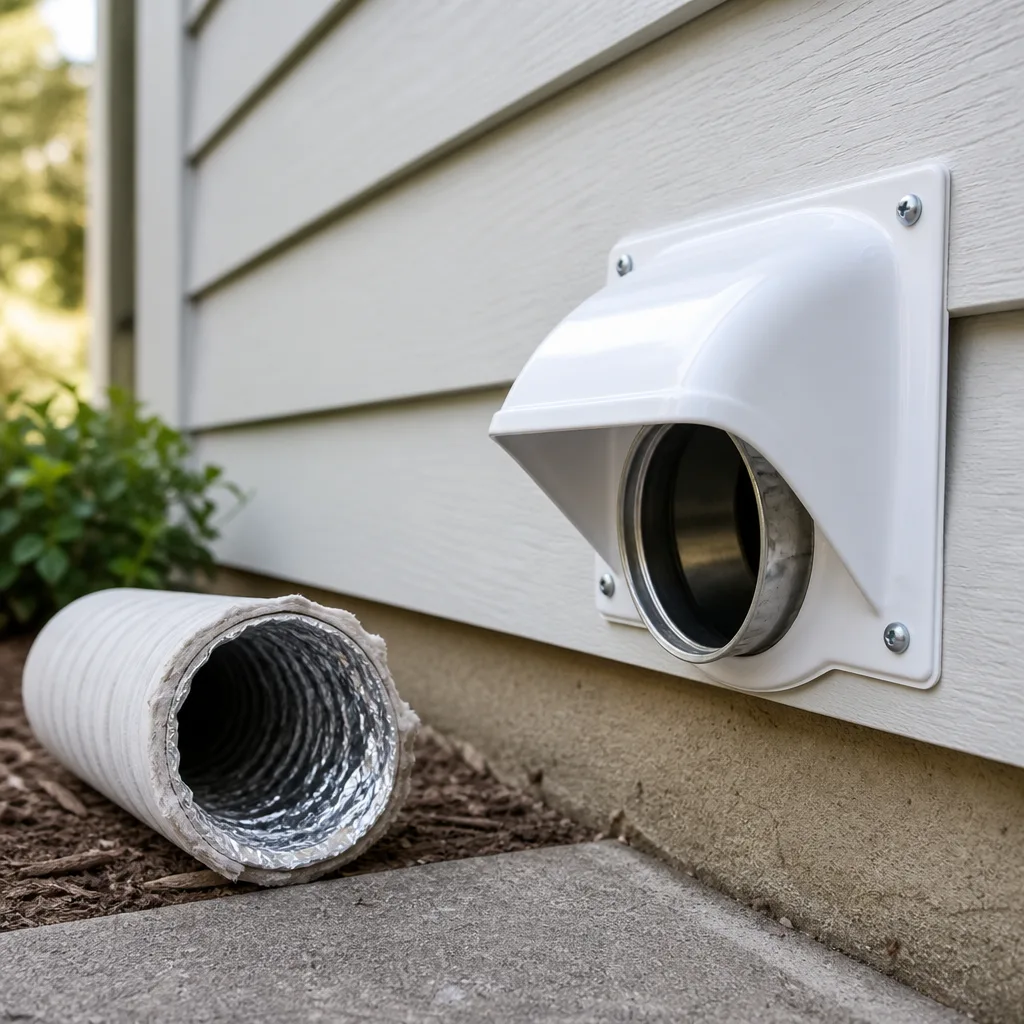 Dryer vent cleaning
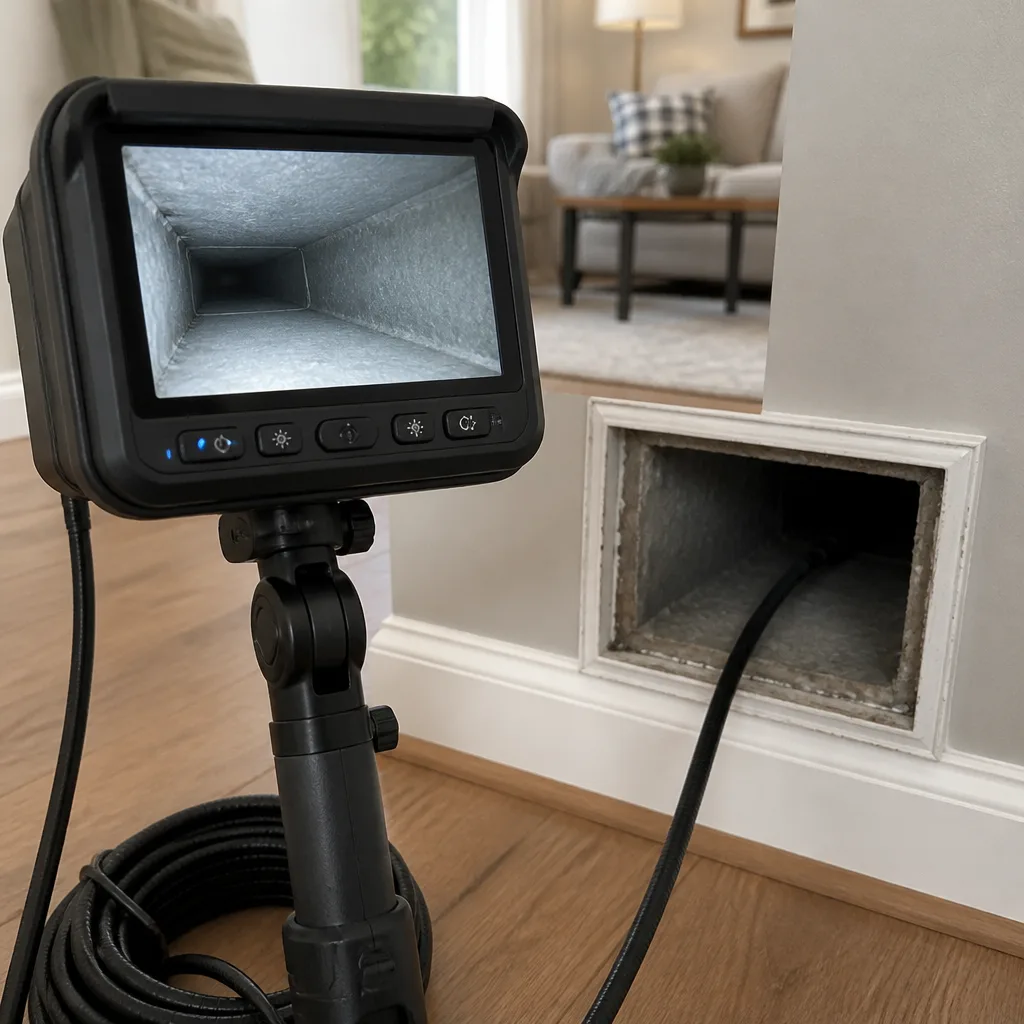 Camera inspection
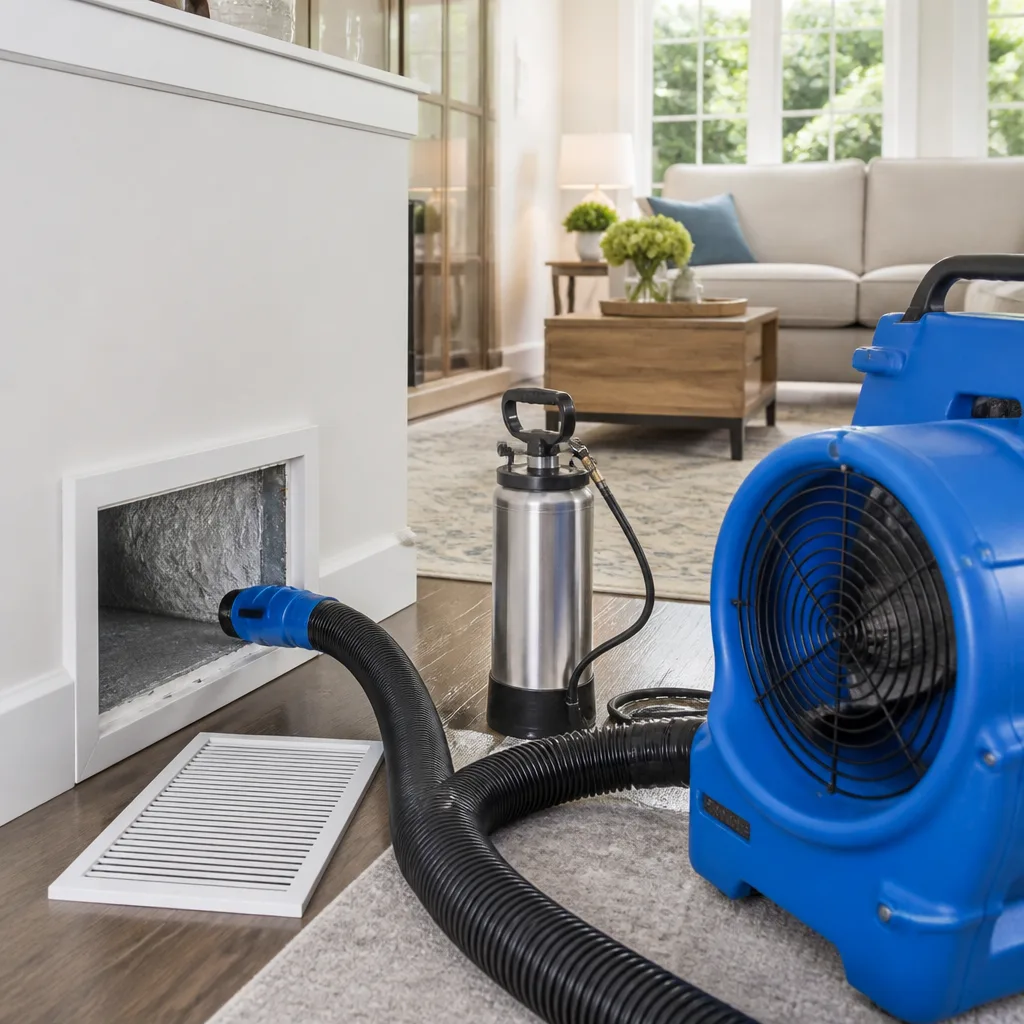 Sanitizing & deodorizing
Whole-system duct and dryer vent check with before-and-after photos - you see exactly what came out of your vents
That "$99 whole-house special" is a bait ad - the real number appears once they are in your hallway, or the "clean" is a shop-vac at the register. We photograph the inside of your ducts before and after instead.
Air Duct Cleaning Warning Signs: A Sacramento Homeowner’s Reference Guide
Dust reappearing on furniture three days after a thorough cleaning isn’t a housekeeping problem. It’s your duct system redistributing what’s already inside it every time the fan cycles on. Sacramento homeowners deal with a specific set of conditions that make this worse than almost anywhere else: months of dry heat, wildfire smoke seasons that push fine particulate matter through return grilles, and homes built before modern filtration was even an afterthought. This guide names the warning signs precisely, explains what’s actually causing each one, and tells you honestly whether it’s a five-minute check you can do yourself, a professional inspection, or a call you should make this week. For a deeper dive, see The Complete Guide to Air Duct Cleaning in Sacramento.
Styles & brands we work with
Quick Answer
The most common air duct cleaning warning signs in Sacramento homes are dust visibly blowing from registers when the system starts, a musty or burning smell that appears only when the HVAC runs, rooms that stay noticeably warmer or cooler than the rest of the house, allergy symptoms that improve when you leave home and return when you come back, and a steady increase in dust on surfaces despite regular cleaning. When two or more of these signs appear together, the ductwork is usually redistributing accumulated debris rather than just passively holding it.
Table of Contents
- The Five Sensory Warning Signs Homeowners Notice First
- Sacramento-Specific Triggers That Accelerate Duct Contamination
- How to Tell Ducts Apart from the Filter, Blower, and Coil
- A Safe At-Home Inspection Sequence Any Homeowner Can Do
- When to Act This Week vs. When Monitoring Is Enough
- What Actually Happens During a Professional Duct Cleaning
- Common Mistakes to Avoid
- When to Call a Professional
- Frequently Asked Questions
- The Bottom Line
The Five Sensory Warning Signs Homeowners Notice First
Most Sacramento families don’t go looking for duct problems. They notice them the same way you’d notice a slow leak under the sink: a smell, a sound, a patch of dust that keeps coming back. Here are the five signs we hear about most often, in order of how reliably they point to the ducts rather than something else in the system.
1. Dust Blowing from Registers When the System Starts
Watch a register in a dark room with a flashlight at an angle while the fan kicks on. If you see a visible puff of fine particles shoot into the room in the first two seconds, that’s material that settled inside the ductwork being launched into your living space. It’s not from outside. It’s not from your furniture. It’s from inside the runs. In Sacramento’s dry climate, this debris stays light and powdery, so it travels farther and resettles on every horizontal surface almost immediately. This is the single most reliable indicator that the ducts themselves have accumulated enough debris to need attention.
2. A Musty, Stale, or Slightly Burning Smell Only When the HVAC Runs
A smell that appears only when the fan runs, then fades when the system shuts off, points to whatever is inside the ducts or on the coil. Musty smells usually mean accumulated dust and pet dander that has absorbed moisture during humid winter months and is now being warmed and recirculated. A faint burning or dusty electrical smell during the first heating cycle of fall is often just dust settling on the heat exchanger and burning off, but it’s also a reminder that the system has been collecting debris all summer. If the smell persists beyond the first few heating cycles, the ductwork itself is almost certainly holding the source.
3. Uneven Room Temperatures with No Obvious Explanation
When one bedroom stays five degrees warmer all summer while the rest of the house cools fine, people blame the window, the insulation, or the AC unit. Often the actual cause is a duct run that’s partially restricted by built-up debris on the inside walls of the duct, working like a narrowed artery. The air still flows, but at reduced volume. That room never quite reaches the set temperature. Sacramento’s hot summers make this sign easy to notice, because the temperature difference between a clean duct run and a dirty one becomes more dramatic the harder the system works.
4. Allergy Symptoms That Follow You Indoors
If one family member’s sneezing and itchy eyes improve noticeably when they’re at work or school and return within a few hours of being home, the HVAC system is suspect. Ducts that hold pollen, dust mite debris, and pet dander from years of valley living become a delivery system for those allergens. This is especially common in Sacramento homes with pets: dander accumulates inside the return path, and every cooling cycle sends another dose into the occupied spaces. Families often notice the pattern before they connect it to the ducts, because symptoms are delayed and variable.
5. New or Unusual HVAC Noises During Operation
A clean system makes a predictable sound: the whoosh of air moving, the low hum of the blower. When enough debris builds up on the blower wheel or inside the return path, the system has to work harder, and that effort shows up as sound. A whistling register may mean the register opening itself is partially obstructed. A rhythmic thumping from the air handler can indicate debris on the blower wheel throwing it out of balance. None of these sounds are normal, and none of them fix themselves. They’re worth investigating whether or not you suspect the ducts specifically.
If you’re seeing even two of these five signs together, the ductwork is a likely contributor. The full guide to Air Duct Cleaning in Sacramento covers what happens during a professional cleaning and what to expect from the process.
Sacramento-Specific Triggers That Accelerate Duct Contamination
Ducts in Sacramento get dirtier faster than ducts in coastal California for reasons that have nothing to do with housekeeping. Here’s what’s actually working against your system in this specific climate.
Wildfire Smoke and Fine Particulate Matter
Sacramento sits in a valley that collects smoke from fires burning in every direction: the foothills to the east, the coastal ranges to the west, and the Sierra in bad seasons. That smoke carries particles measured in microns, small enough to pass through most standard filters without stopping, and fine enough to bond to the oily residue already coating the inside of older ductwork. One bad smoke season can deposit more particulate inside a duct system than five years of ordinary household dust. Even when the sky clears, the material you inhaled for a few weeks in August and September is still sitting in your ducts, waiting for the next time the fan runs.
Pet Dander in Valley Heat
Sacramento is a pet town. Dogs and cats live indoors. In summer, pets shed more, and the HVAC system runs longer, which means more fur and dander gets pulled into the return path every hour the system operates. In the dry heat, that dander never breaks down or compacts. It stays light, easily lifted, and ready to re-enter the living space. Homes with multiple indoor pets and a central system see the fastest accumulation, especially when the filter hasn’t been changed on schedule.
Older Homes with Original Ductwork
A large share of Sacramento’s housing stock was built between 1940 and 1980, and a surprising number of those homes still have the original sheet metal duct runs, often unsealed at the seams and uninsulated in the attic. Those ducts lose conditioned air into the attic and pull attic air back in through gaps. Every leak is an entry point for whatever is in the attic: fiberglass particles, dust from old insulation, rodent debris, and plain Sacramento dust. Homes in neighborhoods like Tahoe Park, Colonial Heights, and parts of South Land Park Hills tend to have this older duct profile, and it changes what cleaning can and can’t accomplish. Leaky ducts get dirty again faster, and sometimes sealing is the real fix rather than cleaning alone.
Long Cooling Seasons, Short Heating Seasons
Most of the country runs heating hard for months and uses AC moderately. Sacramento runs cooling hard from May through October, which means the system is circulating air through the ducts nearly constantly for half the year. More runtime means more air movement, more particulate deposition, and faster buildup than in a climate with a balanced heating and cooling load.
Construction Dust from Sacramento’s Active Renovation Market
Sacramento has seen consistent renovation activity in older neighborhoods for over a decade. Whole-house remodels, ADU additions, and kitchen gut jobs produce drywall dust and sawdust that doesn’t stay in the construction zone, even with careful masking. It gets pulled into the return and deposited throughout the system. If you bought a flipped home in Oak Park or East Sacramento or completed a remodel in the last few years, part of what’s in your ducts is construction material from that project.
How to Tell Ducts Apart from the Filter, Blower, and Coil
One of the most common mistakes in this industry is treating every HVAC symptom as a duct problem. Sometimes the ducts are fine and the real problem is a $15 filter or a blower wheel. Knowing the difference can save you from spending on a cleaning you don’t need, or from cleaning the ducts while leaving the actual source untouched. For help deciding, read our DIY vs Professional Air Duct Cleaning: The Sacramento Homeowner’s Decision Guide. Here’s a practical breakdown.
If the Problem Is the Filter
A clogged filter restricts airflow across the entire system. The sign is usually weak airflow at every register, not dust blowing from one or two. Change the filter, then run the fan for twenty minutes. If airflow improves, the filter was the problem. If airflow is still weak at specific registers and stronger at others, look at the duct runs themselves. Sacramento homeowners should check filters monthly during fire season and during peak cooling months, because the system is moving more air and catching more particulate.
If the Problem Is the Blower
The blower wheel pulls air through the return, pushes it past the coil, and sends it down the supply runs. Debris on the blower wheel reduces its efficiency and creates imbalance. The tell is often a rhythmic sound from the air handler unit, or reduced airflow at every register even with a clean filter. Blower cleaning is a different job than duct cleaning and usually requires access to the air handler cabinet. A technician can tell you in minutes which one applies.
If the Problem Is the Evaporator Coil
The coil sits above or beside the furnace and cools the air before it enters the supply ducts. A dirty coil restricts airflow and reduces cooling capacity, but the symptoms show up as a system that runs constantly without hitting temperature, or ice on the coil itself. Coil cleaning is part of routine HVAC maintenance and is not the same as duct cleaning. However, the two often go together: a dirty coil usually means the air passing over it was dirty too, and the ducts upstream are contributing.
If the Problem Is the Ducts Themselves
Duct problems show up as localized symptoms: one room that’s always wrong, dust at one register but not others, a smell from specific vents. The ducts are the delivery network, so problems in the network usually show up selectively, not uniformly. When symptoms are uniform across the house, look upstream: filter, blower, coil. When symptoms are specific to certain rooms or registers, the duct runs themselves are the strongest suspect.
A Simple Decision Check
- Weak airflow everywhere: change the filter first, then check the blower and coil.
- Dust at specific registers only: check the duct run feeding those registers.
- Dust at every register: the whole system, including ducts, has likely accumulated debris.
- One room always off temperature: check the duct run to that room for restriction or leakage.
This distinction matters because a conscientious technician should tell you when cleaning isn’t the right spend. At Mortons Air Duct Sacramento, we’ve told homeowners their ducts were actually fine and the real issue was a filter they’d been sold the wrong size for. That’s the kind of honesty that builds trust, and it’s part of how we work in Mortons Air Duct Sacramento home service area.
A Safe At-Home Inspection Sequence Any Homeowner Can Do
You don’t need to open any panels or touch any mechanical components to get a clear picture of what’s happening inside your ducts. The safest and most informative inspection is done from the outside, looking at the points where the system meets your living space. Here’s a precise sequence, in order.
- Start at the return grille. Turn the fan on at the thermostat. Hold a piece of white paper or a tissue against the return grille. If it holds firmly, the return is pulling air properly. Now look at the grille itself. A visible coating of gray fuzz on the grille bars means the return is catching material before it enters the system. That material is also inside the ducts.
- Check the filter. Pull the filter and hold it up to a light. If you can’t see light through it, it’s overdue for replacement. Note the date you installed it. Sacramento summers often require filter changes every 30 days, not every 90, because the system runs so much more.
- Move to each supply register. Work room by room with the fan running. Feel the airflow at each register with your hand. Compare rooms. A register that feels noticeably weaker than others points to a restriction in that specific duct run.
- Look at the register vanes and the wall or ceiling around them. Dark staining or a gray shadow pattern around a register opening, especially on ceilings, is dust that has been blown out and then clung to the surface. It’s a reliable sign that the duct feeding that register carries more debris than it should.
- Smell the air at each register. Stand close and breathe normally through your nose. A clean system should smell like nothing. Any mustiness, stale odor, or oily dust smell that appears at multiple registers points to material inside the duct system rather than a single localized source.
- Listen to the system when it starts. The first ten seconds of startup tell you a lot. A clean system starts smoothly and quietly. Popping or ticking sounds are usually sheet metal expanding as temperature changes, but a grinding or rhythmic thumping sound is worth investigation by a professional.
This entire sequence takes fifteen minutes and requires no tools beyond a piece of paper and your nose. If everything checks out, your system is probably in reasonable shape. If multiple items raise flags, keep reading for what to do next, or browse more guides & resources.
When to Act This Week vs. When Monitoring Is Enough
Not every warning sign demands immediate action. Some conditions hold stable for months. Others should change your calendar this week. Here’s an honest breakdown of each category.
Conditions You Can Monitor Through the Next Filter Change
- Mild dust accumulation at one register with no smell and no airflow reduction. Vacuum the register face and check again in thirty days.
- A faint musty smell that appears only on the first cooling cycle of the season and fades. This is often condensed moisture on accumulated dust. Note it and see if it returns.
- Slightly uneven temperatures between rooms, under three degrees difference. Monitor through the next season change.
- Normal startup sounds including mild popping or ticking from thermal expansion. These are mechanical, not contamination.
Conditions That Warrant Same-Week Professional Attention
- Visible dust blowing from multiple registers every time the system starts, after you’ve changed the filter and vacuumed the register faces.
- A persistent musty or stale smell that appears every time the fan runs and doesn’t fade. This suggests accumulated organic material inside the ducts.
- Family allergy symptoms that track with system runtime and don’t improve after a filter change.
- One room that stays five degrees or more off from the rest of the house, with weak airflow at that room’s register specifically.
- Unusual sounds from the air handler including rhythmic thumping or scraping that didn’t exist before.
- Post-remodel or post-wildfire-season concerns when you know the system was exposed to construction dust or heavy smoke.
Here’s the underlying principle: the longer debris sits inside ductwork, the more it binds with moisture, oils from cooking, and the residues already coating the duct walls. What starts as loose dust that a cleaning could remove completely becomes a sticky film that’s harder to extract and more likely to hold odors. Sacramento’s dry climate actually works in your favor here, because debris stays dry and removable longer than in humid regions. Acting sooner usually means a simpler, more complete result.
If you’re in the same-week category, or if you’re just not sure, the next step is knowing what a real cleaning actually involves. You can also read more about Dryer Vent Cleaning in Sacramento, since dryer vents have their own warning signs and their own safety considerations.
What Actually Happens During a Professional Duct Cleaning
People hesitate to schedule duct cleaning because they don’t know what to expect, and that’s fair. The industry has a reputation for bait-and-switch coupon pricing and rushed jobs. Understanding the process helps you evaluate any company you’re considering, including whether their equipment and approach match their promises.
The Equipment Matters
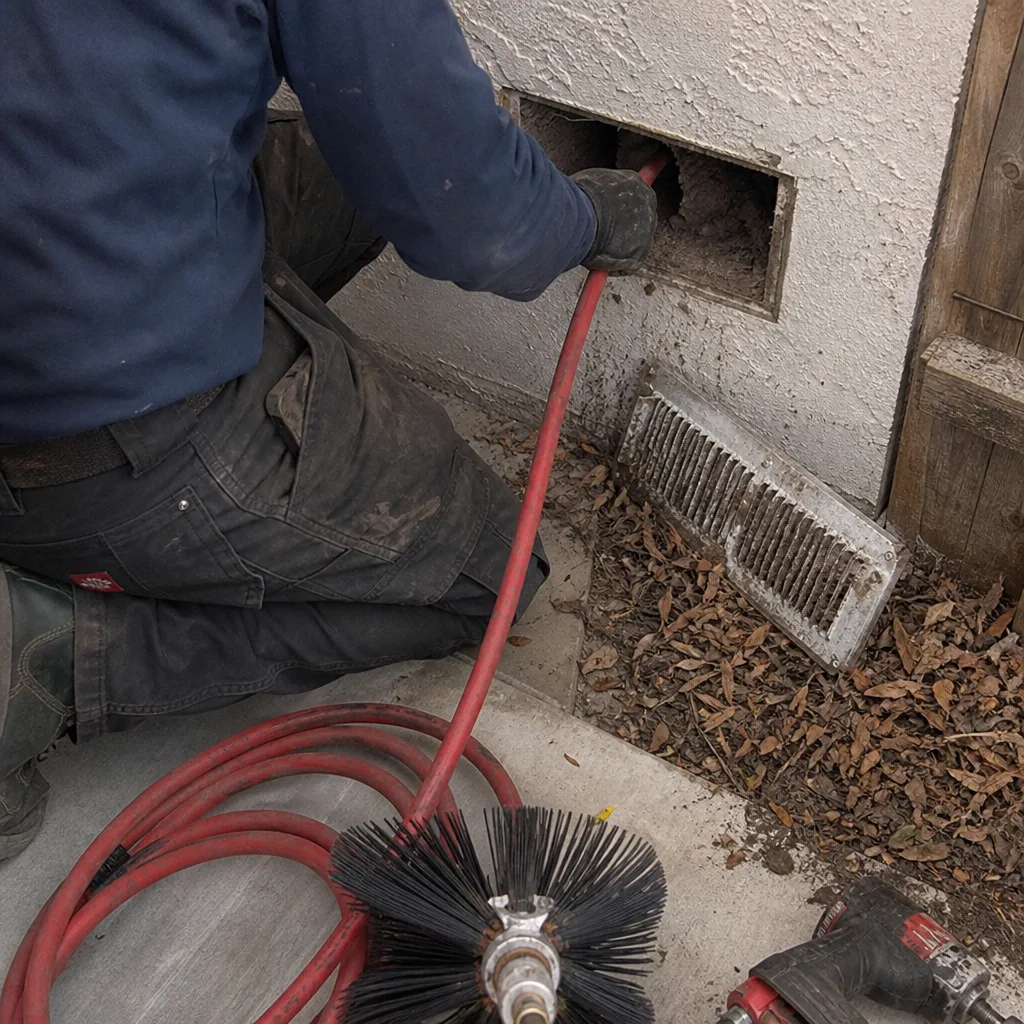
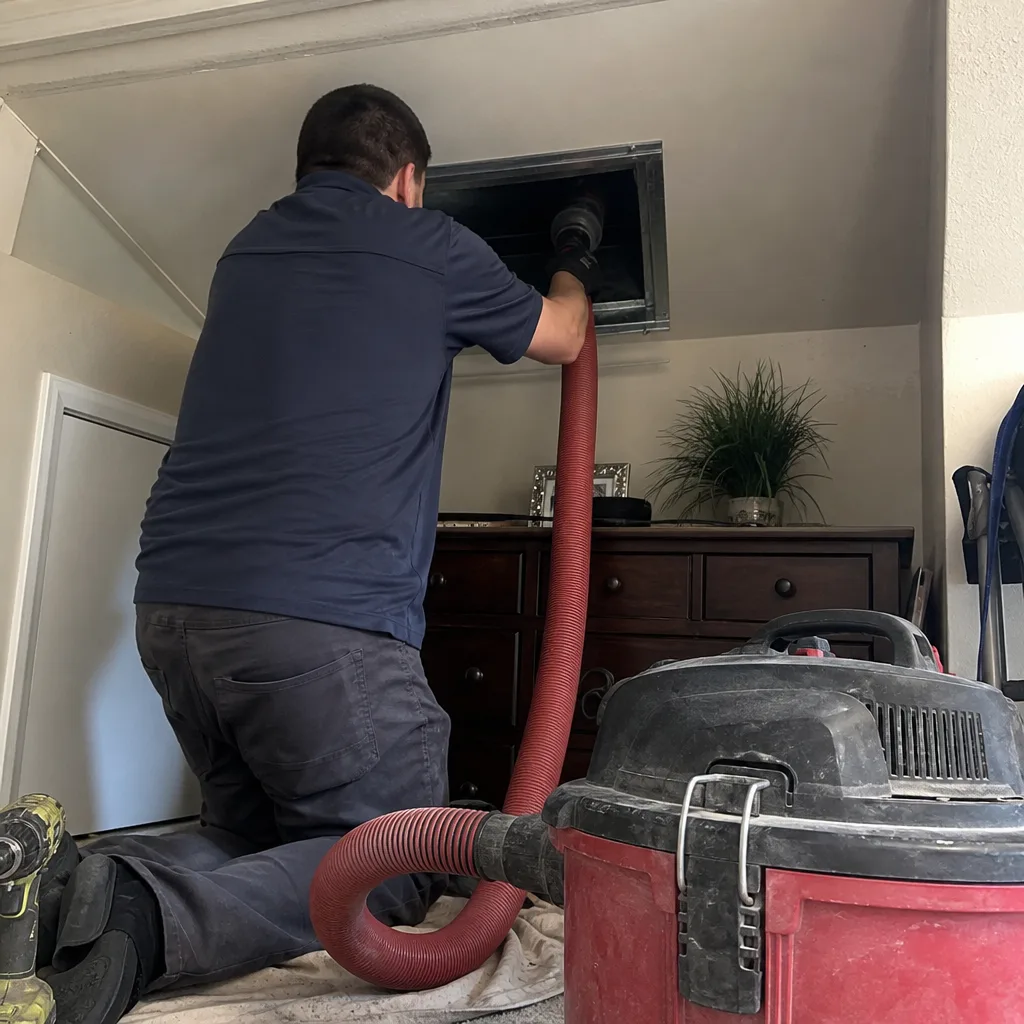
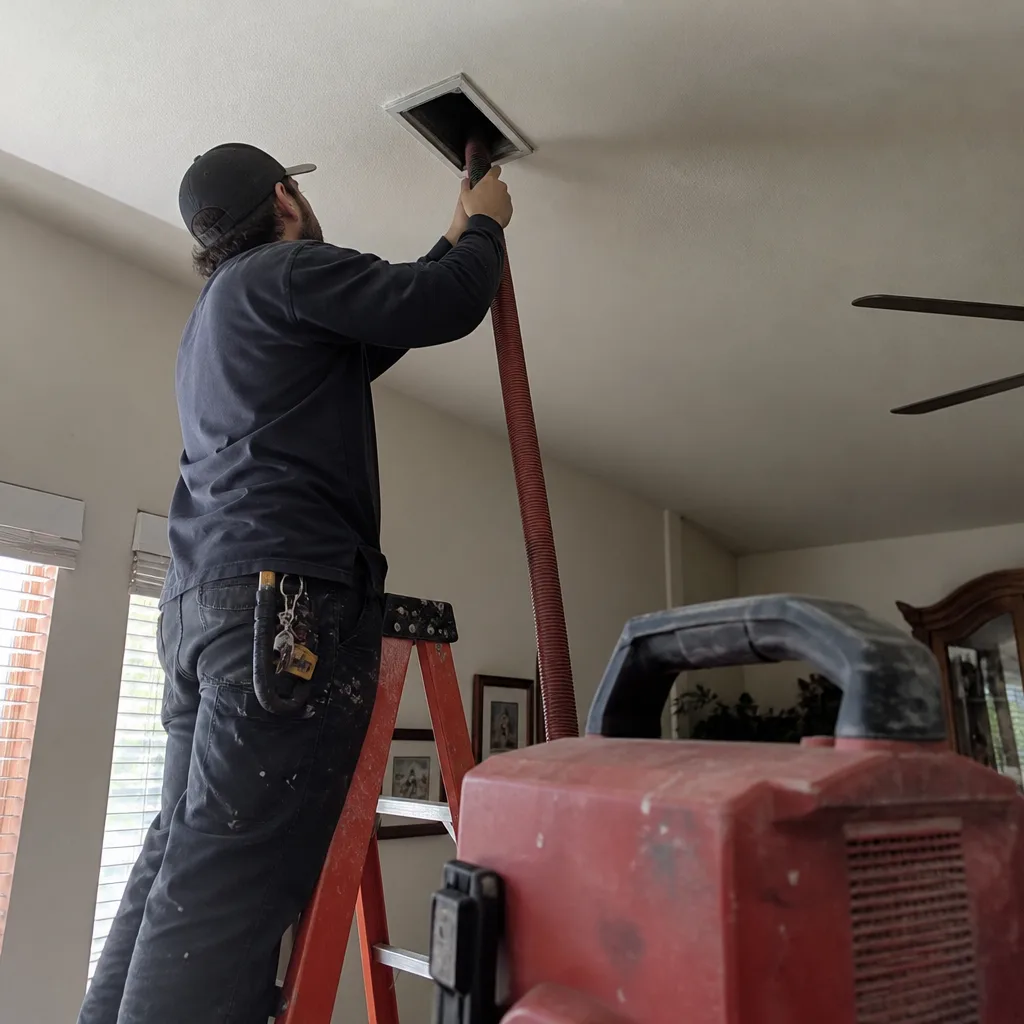
Professional duct cleaning uses either a rotary brush system that physically agitates the duct walls, a high-powered vacuum collection unit that creates negative pressure throughout the system, or ideally both in combination. The brands we work with, including Rotobrush and Nikro, are built for this specific job; they’re not the same machines used to clean carpets or detail cars. Rotary brush systems scrub the duct walls rather than just blowing air through, which matters when debris has adhered rather than sitting loose. The vacuum side collects what the brush loosens, in real time, into a sealed containment unit. From the homeowner’s perspective, the process should be contained and methodical, not chaotic.
The Sequence We Follow
- Protect the home first. Shoe covers go on at the door. Drop cloths protect the floor path to the equipment. Furniture near registers gets covered. This is standard practice, not an upsell.
- Access the system. We connect the vacuum collection unit to the main trunk line, creating negative pressure through the entire duct network.
- Agitate each run. Working register by register, we run the rotary brush through each supply and return duct. The agitation loosens debris from the duct walls while the vacuum pulls it toward the collection unit.
- Clean the registers and grilles. Each register cover gets cleaned before it goes back. The openings themselves get wiped down.
- Document the work. Before we leave, we take photos of the cleaned portions and the clean-up. You get a visual record of what was done. This photo is part of the 365-Day Done Right Promise and the Cedarwell Care Promise at Morton’s, not an optional extra.
What It Costs in Sacramento
Air duct cleaning in Sacramento typically runs between $400 and $900 for a standard single-family home, depending on system size, number of returns, and accessibility. Homes with multiple systems or unusually long runs fall above that range. Duct cleaning combined with dryer vent cleaning usually lands in a similar band and often makes sense to schedule together. The price should be given to you in writing before any work begins, and it should not be a per-vent calculation that inflates as the job progresses. One flat price for the whole system, agreed before the crew starts, is what every homeowner should expect.
Common Mistakes to Avoid
- Ignoring one persistent warning sign because the other four aren’t present. A musty smell that never goes away is enough on its own. Warning signs don’t need to cluster to be valid.
- Changing the filter and assuming the problem is solved. A new filter catches new debris moving forward. It does nothing for the material already coating the duct walls upstream.
- Treating every symptom as a duct issue. Weak airflow everywhere is often the filter or the blower. A Sacramento homeowner who gets the ducts cleaned but leaves a clogged coil is spending money without solving the problem.
- Hiring based on the lowest coupon price. The duct cleaning industry has a well-known bait-and-switch pattern: a low per-vent teaser price that becomes a far larger invoice once the van is in the driveway. Get a whole-system price in writing before work starts.
- Waiting until after a major remodel to think about ducts. Drywall dust and sawdust from construction get pulled into the system throughout the project. If you’re planning a remodel in Sacramento, plan for duct cleaning after it’s done.
- Using a standard fiberglass filter during fire season and expecting it to protect the ducts. A basic filter catches large debris only. Fine smoke particles pass through and deposit inside the system. A better filter during smoke season reduces what reaches the ducts.
- Assuming older Sacramento homes don’t need sealing, just cleaning. Original ductwork from the 1950s through 1970s often leaks at the seams. Cleaning cleans what’s inside, but sealing stops the attic air from re-contaminating it. Both may be needed.
When to Call a Professional
Call when you’ve done the at-home inspection and found multiple warning signs, or when a single sign is severe: dust actively blowing from registers, a smell that persists through a filter change, or allergy symptoms that track with system runtime. Also call if you’ve lived in the home for several years, have indoor pets, and have never had the ducts cleaned despite noticing steadily increasing dust. Sacramento’s long cooling seasons push more air through your system than most of the country, so the accumulation curve is steeper. Mortons Air Duct Sacramento offers free estimates in Sacramento and the surrounding area. Call (279) 239-4171 and a person answers, any hour. We’ll walk through what you’re seeing, give you an honest read on whether cleaning is the right step, and provide a written price before any work begins.
Frequently Asked Questions
Air duct cleaning in Sacramento typically costs between $400 and $900 for a standard single-family home, depending on system size and accessibility. Homes with multiple HVAC systems or extensive duct runs may fall above that range. The price should be quoted as one flat amount for the whole system and provided in writing before work starts. Call (279) 239-4171 for an exact quote; estimates are free and there’s no obligation.
You likely need duct cleaning if you see dust blowing from registers at startup, notice a persistent musty smell only when the fan runs, find one room consistently off temperature, or experience allergy symptoms that improve when you leave home. Two or more of these signs together is a strong indicator. A single mild sign can often be monitored for thirty days before deciding.
Most Sacramento homes benefit from duct cleaning every three to five years, but local conditions change the interval. Homes with multiple indoor pets, residents with allergies, or location in a heavy smoke exposure zone during fire seasons may need cleaning more often. Homes that were recently remodeled should have the ducts cleaned after construction is complete, regardless of the previous interval.
Very cheap quotes usually come from a per-vent pricing model that starts low and climbs once the technician arrives and reports that the job is bigger than expected. Some operations also use entry-level equipment that doesn’t agitate the duct walls properly, producing a visibly incomplete result. A legitimate whole-system quote will be in the range described above and will not change once the crew arrives. Call (279) 239-4171 and we’ll give you a written price before anyone steps foot inside.
Ask for photo documentation of the cleaned areas before the crew leaves. At Mortons Air Duct Sacramento, a photo of the clean-up is standard practice on every job, along with the written price agreed before work began. If a company resists showing you what was done, that’s a signal worth respecting.
Yes, when done properly. Professional duct cleaning uses contained vacuum collection, so the debris is removed into a sealed unit rather than released into the living space. At Mortons, technicians wear shoe covers, use drop cloths, and work around nap schedules and pet areas. The goal is that the house looks and smells better after the crew leaves, not worse.
The Bottom Line
Sacramento’s climate, housing stock, and wildfire seasons combine to make air duct contamination a faster-moving problem here than in most of the country. The warning signs are observable and consistent: dust at registers, smells on startup, uneven temperatures, allergy patterns, and unusual sounds. Learning to read these signs gives you a clear picture of whether your ducts are the issue or whether the filter, blower, or coil is the real source. When the ducts are the source, a professional cleaning with the right equipment, a written upfront price, and photo documentation is a straightforward way to restore the air quality your family breathes every day. Paul Adeyemi and the team at Mortons Air Duct Sacramento are available by phone around the clock at (279) 239-4171 to answer questions and schedule an estimate.
Written by Paul Adeyemi, Owner at Mortons Air Duct Sacramento, serving Sacramento since 2005.
See the difference
 Before
 After
After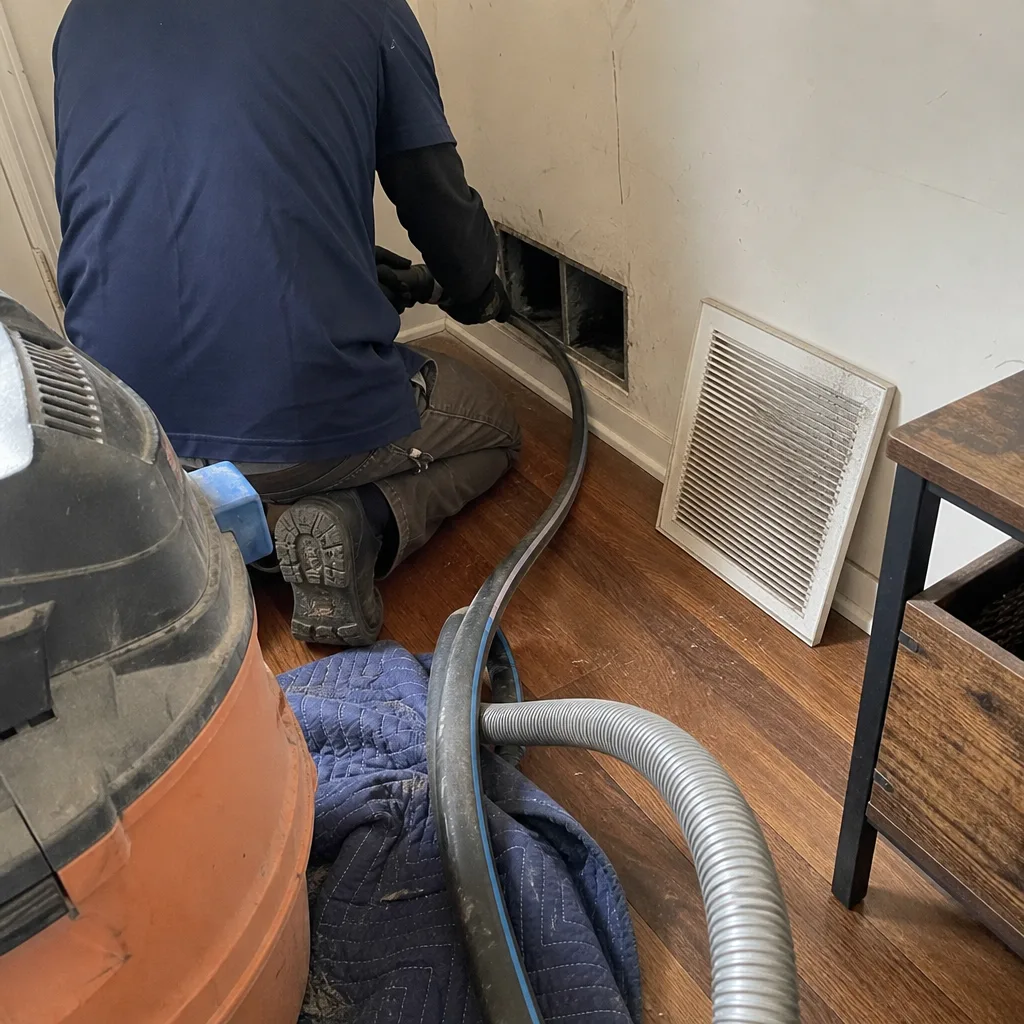 Before
 After
After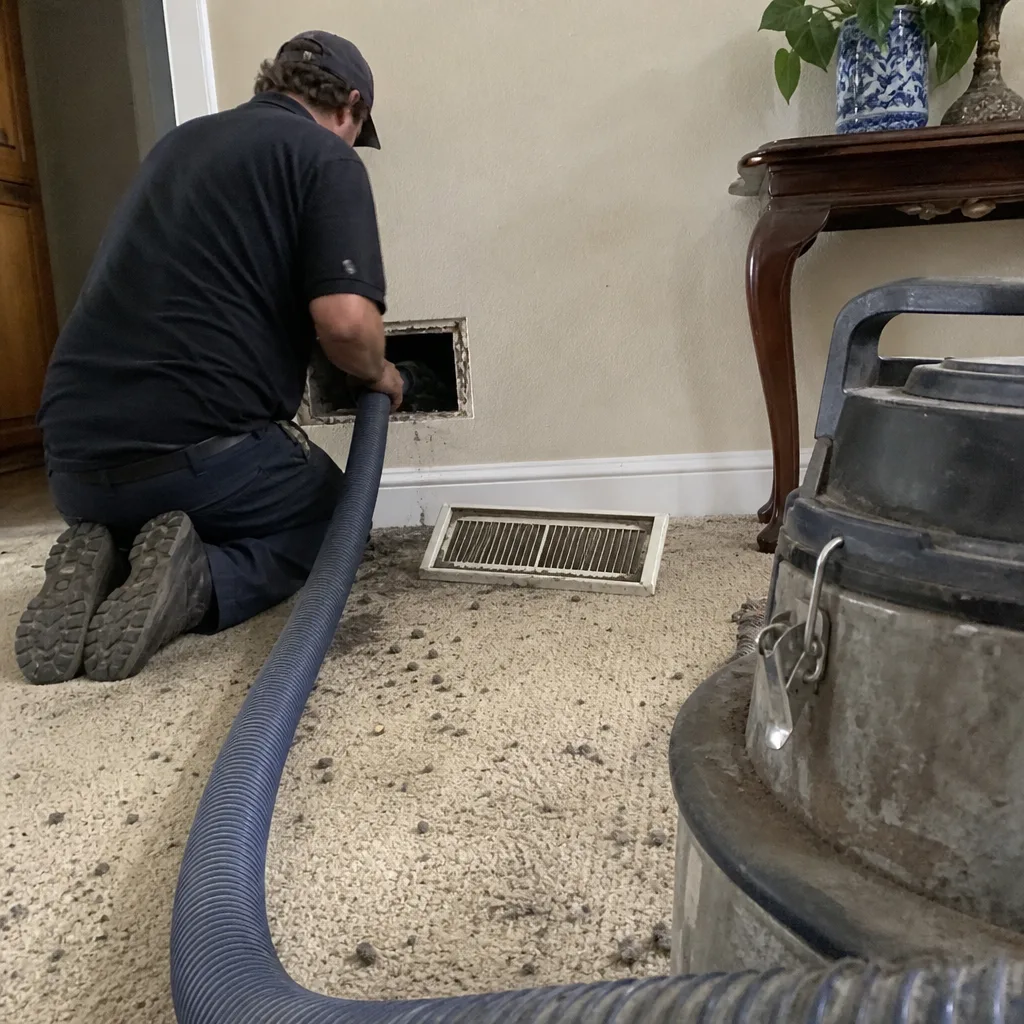 Before
 After
After