
Last updated October 15, 2026
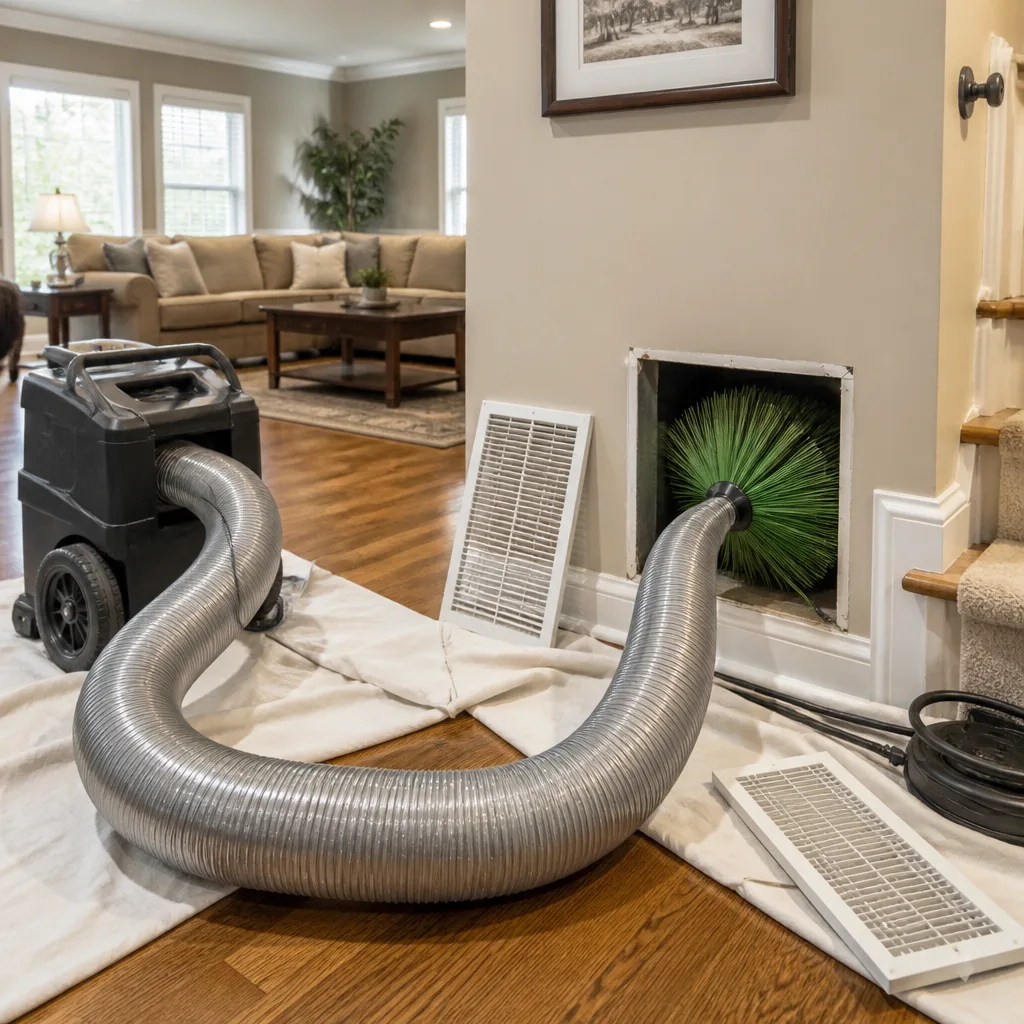 Whole-home duct cleaning
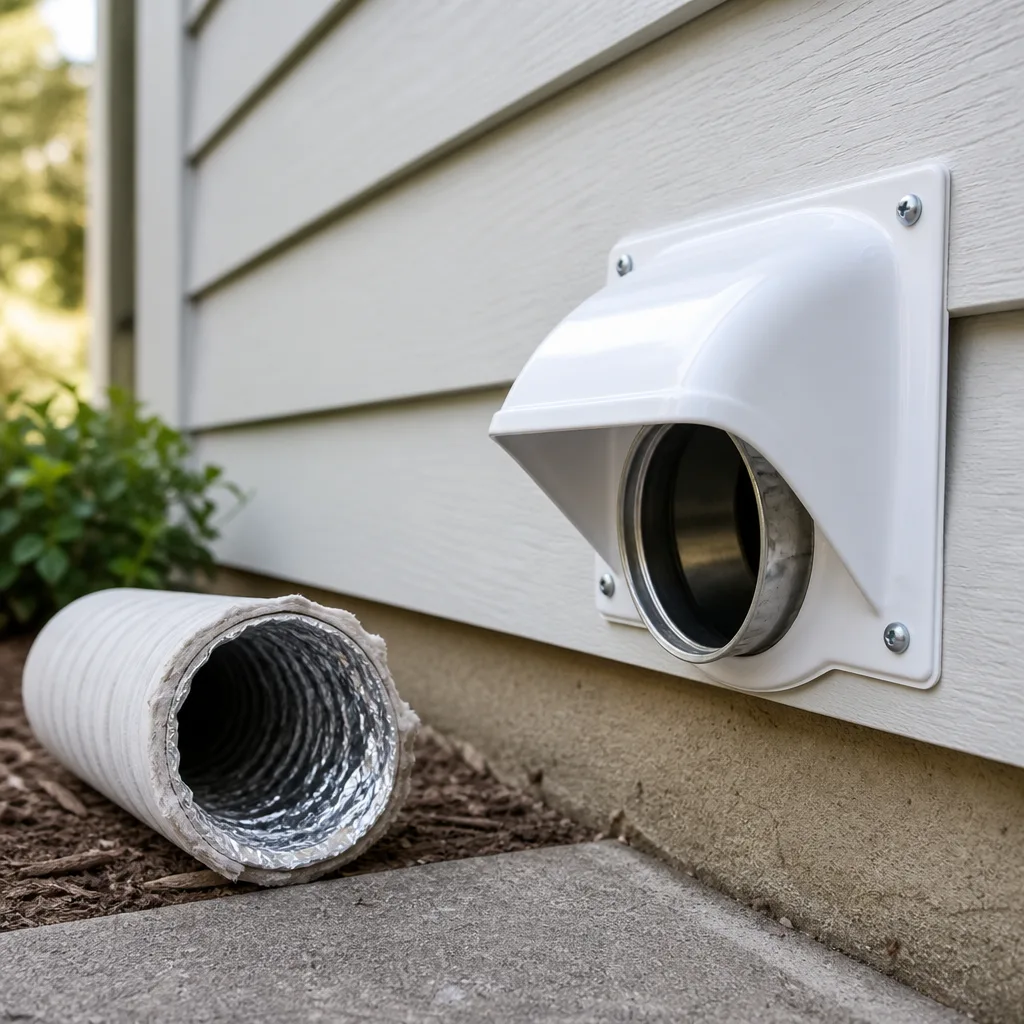 Dryer vent cleaning
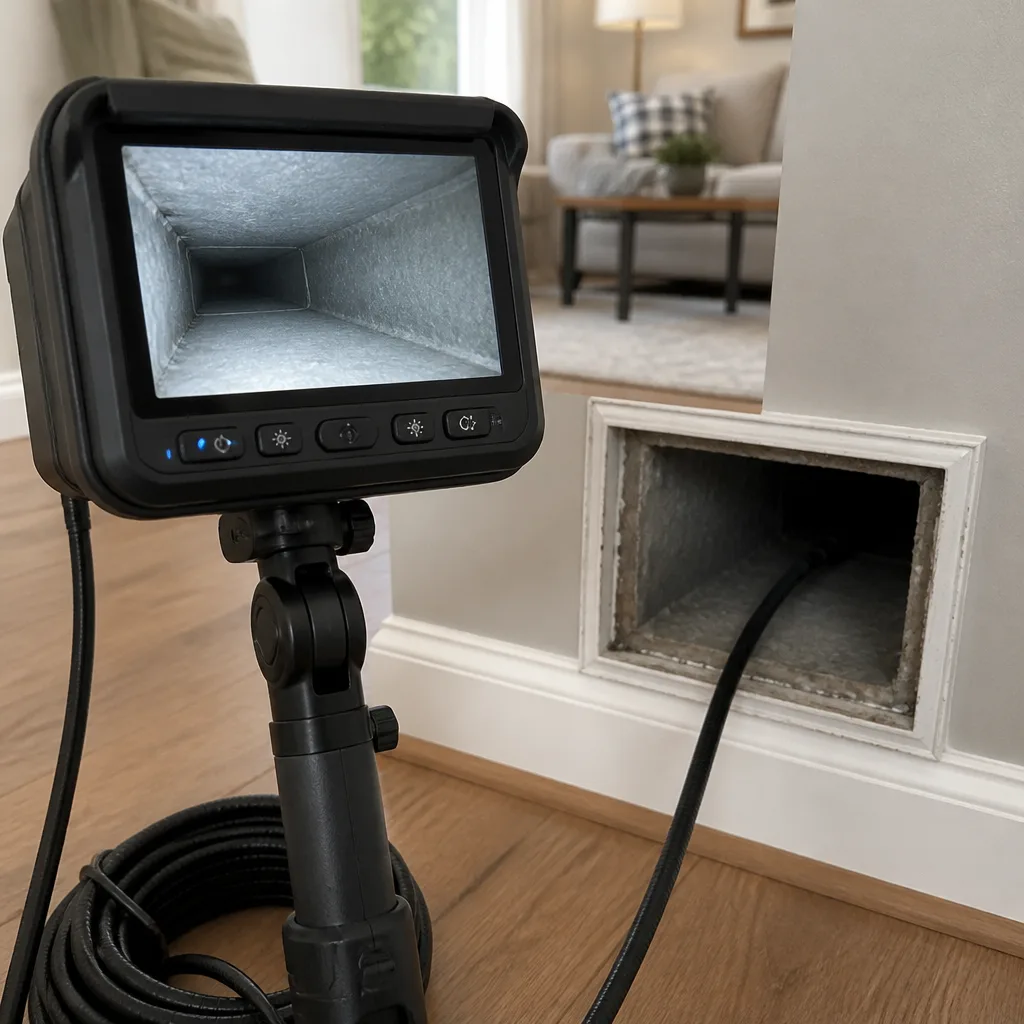 Camera inspection
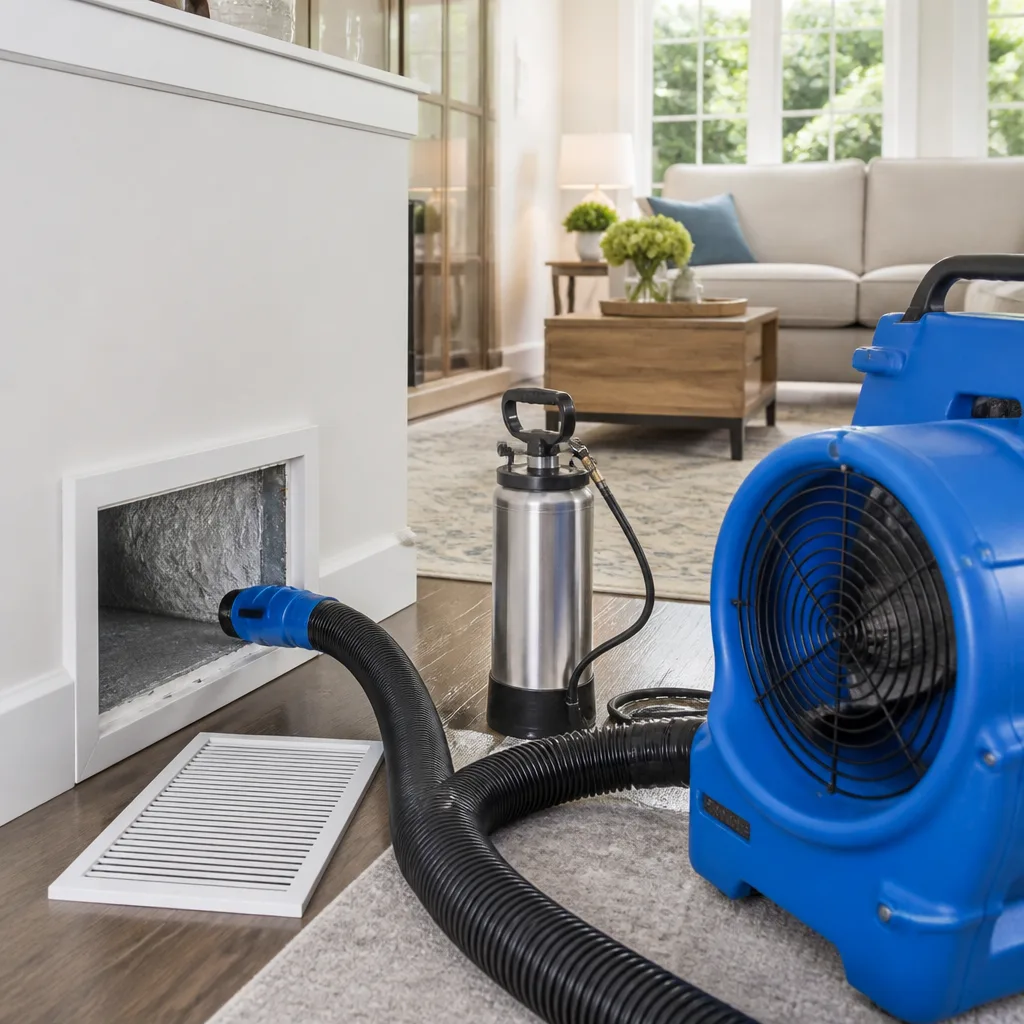 Sanitizing & deodorizing
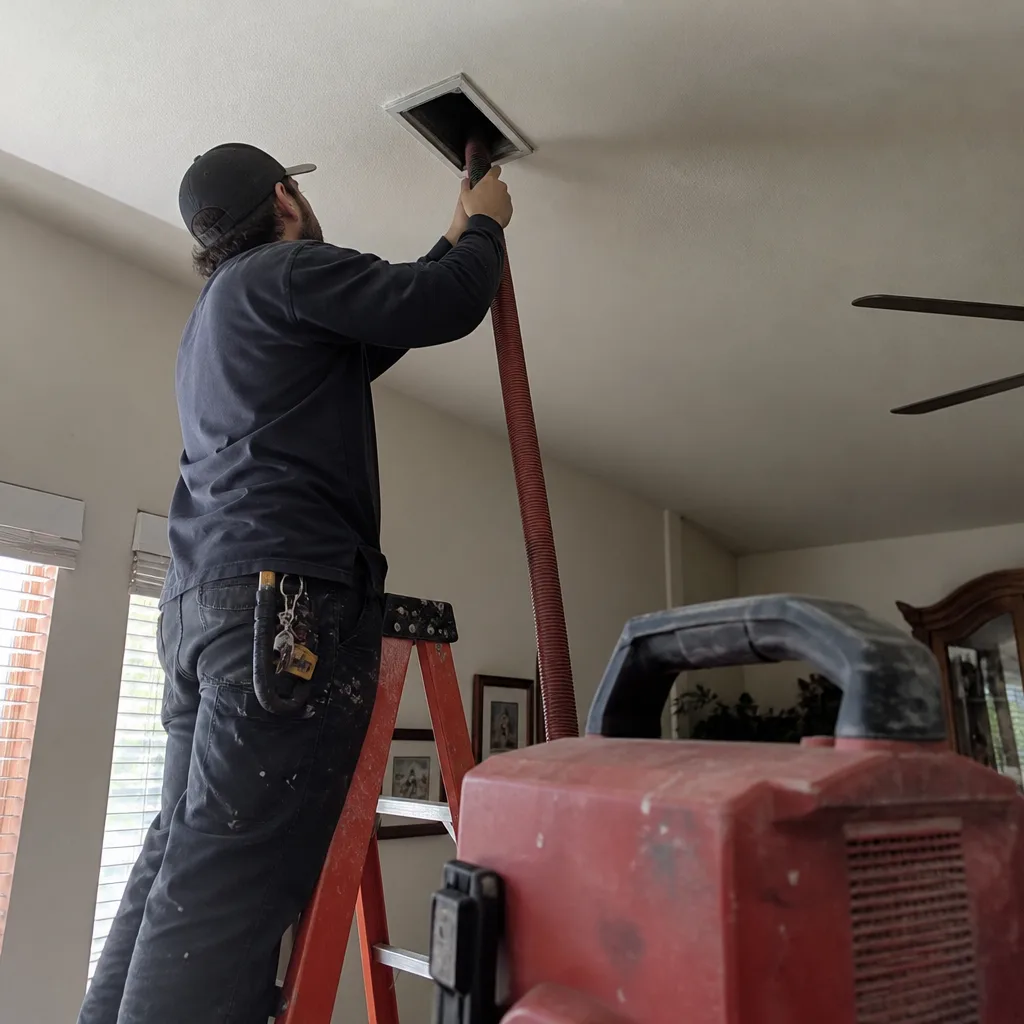
Whole-system duct and dryer vent check with before-and-after photos - you see exactly what came out of your vents
That "$99 whole-house special" is a bait ad - the real number appears once they are in your hallway, or the "clean" is a shop-vac at the register. We photograph the inside of your ducts before and after instead.
Air Duct Cleaning Maintenance Checklist for Sacramento Homeowners
Most Sacramento homeowners change their air filter and call it maintenance. But a clean filter on a contaminated duct system is like putting a fresh lid on a dirty pot. The filter’s job is to protect your HVAC equipment, not to clean the air you breathe. That distinction matters more in Sacramento than in almost any other California city, because our seasonal rhythm here, almond bloom, wildfire smoke, tule fog, doesn’t look like anyone else’s. This guide gives you a month-by-month maintenance checklist built for Sacramento’s actual climate, so a professional air duct cleaning in Sacramento actually holds up for years instead of slowly undoing itself by the next allergy season.
Styles & brands we work with
Quick Answer
Quick Answer: A Sacramento homeowner should check air filters monthly, inspect registers and grilles every 90 days, schedule Air Duct Cleaning services every 2 to 3 years (sooner if you have shedding pets, recent renovation, or wildfire smoke exposure), and clean the dryer vent every 12 months. The heavy-lifting months here are March and April (almond harvest dust), August through October (wildfire season), and November (heating startup and tule fog).
Table of Contents
- Why a Seasonal Rhythm Matters in Sacramento
- The Month-by-Month Sacramento Duct Maintenance Checklist
- Your Filter: What MERV Rating Actually Makes Sense Here
- How to Inspect Registers and Grilles Yourself Between Professional Visits
- Why Your Dryer Vent Belongs in the Same Calendar
- DIY Checks vs. Professional Inspection: Go or No-Go Criteria
- Kids, Pets, and Duct Maintenance: The Overlooked Variables
- Common Mistakes to Avoid
- When to Call a Professional
- Frequently Asked Questions
- The Bottom Line
Why a Seasonal Rhythm Matters in Sacramento
Sacramento’s air quality doesn’t follow a national average. It follows the valley’s agricultural calendar and the Sierra’s fire season. In spring, almond orchards bloom and then release fine dust during harvest from late February through early April. That dust settles into ductwork the same way it settles on your car. In late summer, wind shifts push wildfire smoke from the foothills and coastal ranges into the Central Valley, where the geography traps it. And in winter, tule fog rolls through and keeps humidity high while heating systems recirculate whatever accumulated during the dry months.
That means a duct cleaning done in, say, June is a different investment than one done in November. June follows the almond harvest and spring pollen; the system just took a beating and a mid-year clean resets it before the wildfire months hit. November follows smoke season and precedes the fog months, when your heater will run for four straight months and bake in whatever sits in the ductwork. We’ve seen homes in Natomas and Land Park where the same duct system looks dramatically different between March and September, simply because of what’s blowing through the air outside-learn more in our Air Duct Cleaning Warning Signs: A Sacramento Homeowner’s Reference Guide.
A seasonal rhythm also matters for one simple reason: ducts don’t fail suddenly. They degrade slowly. A register that’s slightly loose in January becomes a dust pathway by June. A filter that’s clogged by April forces your air handler to work harder by July. When you tie maintenance to Sacramento’s actual seasons rather than a national “every 3 months” guideline, you catch problems before they compound.
The Month-by-Month Sacramento Duct Maintenance Checklist
Here’s the framework we recommend to Sacramento homeowners. It’s built around the Central Valley’s actual weather and air quality patterns, not a generic national calendar. Each month assumes you do the 5-minute monthly checks and adds only the seasonal tasks that matter locally.
January: Fog Month, Filter Focus
- Check and likely replace your air filter. Tule fog means dense, heavy air and more particles suspended close to the ground, which your HVAC system pulls in continuously.
- Walk the house and hold a tissue near each return vent. Weak pull often means the filter is choking the system or a return duct has come loose.
- If you run a portable humidifier in any room, clean its filter and check the wall around the vent for moisture staining, which can signal condensation forming inside duct runs.
February: Almond Bloom, Allergen On-Ramp
- Sacramento’s almond orchards begin blooming. If anyone in the house has seasonal allergies, consider bumping to a MERV 11 filter this month (more on MERV below).
- Inspect every visible register in the home. Look for gray-white dust that’s fine and even, which is normal, versus clumpy or dark debris, which signals something else is going on.
- Check the outdoor HVAC unit’s condenser area. Remove any leaves, grass, or debris within two feet. A clogged condenser makes the whole system work harder and stirs more dust through the ducts.
March: Almond Harvest Dust
- March is Sacramento’s dustiest month. Almond harvest shakes fine particulate into the air for weeks. Plan to replace the air filter at least once this month, even if it doesn’t look dark.
- This is the month we recommend scheduling a professional duct inspection if you haven’t had one in the past 3 years. Dust from harvest has just been pulled through every return in your home.
- If you have pets, check the filter weekly. Pet dander combines with harvest dust and loads filters faster than any other time of year.
April: Post-Harvest Reset
- If you didn’t schedule a professional cleaning in March, early April is the next best window. The harvest dust has settled and you have a clean stretch before temperatures climb.
- Walk each room and open the register fully. Listen for any rattling or whistling that wasn’t there before. Loose duct connections often show up after a heavy dust load.
- Check the condensate drain line on the indoor air handler. A slow-draining line increases humidity inside the unit, which makes dust particles stickier and more likely to build up in the ducts.
May: Pre-Summer HVAC Checklist
- Before the first real heat wave, run the air conditioning for 20 minutes and walk the house. Sniff near each register. A brief “new” odor is normal; a sour or musty smell is not. That’s a signal for a professional inspection.
- Check all return vents for blockages. In many Sacramento homes, a couch or bookshelf ends up partially covering a return during furniture rearrangements, and a blocked return pulls air from unintended cavities.
- If you have a two-story home, note whether upstairs rooms feel noticeably warmer than downstairs. That often signals an airflow imbalance, which is a duct issue, not a thermostat issue.
June: Cooling Season Begins
- Change the filter again. Sacramento’s summer air conditioning season runs long and hard, and a fresh filter in June protects both your HVAC system and your ductwork for the season’s start.
- Inspect the flex duct in garage or attic spaces if you can safely do so. Look for kinks, sags, or tears. A kinked flex duct reduces airflow and forces the system to work harder.
- Check dryer vent louver outside if you have one. Lint should be freely pushed out when the dryer runs; a fluttering or stuck louver means the vent is blocking.
July: Peak Heat, Peak Load
- Run your hand along the supply registers during a cooling cycle. All registers should feel consistently cool. If one is warm or weak, the duct run to that room may be disconnected or obstructed.
- Look for condensation on registers in humid areas like bathrooms or laundry rooms. Persistent wetness can wick into the duct opening and create conditions for mold growth.
- This is the month to be honest about whether your system is keeping up. If rooms on the west side of the house never quite cool down, the duct design or condition likely needs professional attention.
August: Wildfire Smoke Season Begins
- Sacramento’s wildfire smoke season typically intensifies in August. If the Air Quality Index is above 100 for multiple days, treat your filter as a consumable. Check it weekly and change it when it’s visibly dark, even if that’s after two weeks.
- Run the HVAC fan in “on” mode (not “auto”) during heavy smoke days. This keeps air moving through the filter even when the system isn’t actively heating or cooling. But this also means the filter loads faster.
- If smoke enters the home through an open window or door, wipe down registers and surrounding surfaces. Smoke particles settle fast and get pulled into the system on the next cycle.
September: Smoke Season Peak
- September is often Sacramento’s worst smoke month. If your home has been through several heavy smoke events, consider a professional duct inspection before heating season. Smoke residue coats the inside of ducts and does not simply blow away.
- Check the area around supplies and returns for gray film. That’s smoke particulate that’s being recirculated. It’s a visible sign the duct interior needs attention.
- If you have an Aprilaire or other media air cleaner on your system, verify it’s installed correctly and the door seals. A poorly seated media filter means unfiltered air bypasses it entirely.
October: Transition Month, Pre-Heating Check
- October is the best month in Sacramento to schedule a professional air duct cleaning if you’ve been waiting. Smoke season has wound down and heating season hasn’t started in earnest. You’ll get the cleanest possible start to winter.
- Clean or replace the humidifier pad if you run a whole-house humidifier. A crusted pad releases mineral particles that end up in ducts and on furniture.
- Check the exhaust vents in bathrooms. Run each bathroom fan and feel for air movement. A weak bathroom fan pulls less humidity from the home and contributes to a heavier indoor dust load.
November: Tule Fog and Heating Startup
- Before the first extended heater run, replace the filter one more time. The first few heating cycles after a long cooling season burn off accumulated particles and push them through the system.
- Listen during the first few heating cycles. A soft ticking sound that disappears after a few minutes is thermal expansion, which is normal. A persistent banging or rattling often indicates loose duct hangars or a blower issue.
- If your home has flexible ductwork in the crawlspace, November is a good time to make sure no standing water accumulated during fall rains. Wet crawlspaces accelerate mold growth and duct degradation.
December: Low Humidity, Static Dust
- Sacramento’s winter air gets dry, and dry air holds dust particles longer. If you’re seeing more dust on furniture despite running the system, the filter may be the wrong type or the ducts have an opening pulling from an unconditioned space.
- Inspect the return air plenum or filter slot for gaps. Even a small gap lets unfiltered air bypass the filter entirely, recirculating dust throughout the home.
- Take a flashlight to the first few inches inside the return duct (carefully, with the system off). What you see there is a preview of what’s deeper in the system. Gray, fuzzy buildup means it’s time for a professional cleaning.
Your Filter: What MERV Rating Actually Makes Sense Here
Sacramento households ask us about MERV ratings more than any other single topic. And most of the advice online is either too cautious or too aggressive for our actual climate. Here’s the honest version.
The MERV filter scale runs from 1 to 16, with higher numbers capturing finer particles. Most HVAC manufacturers install a basic MERV 4 or MERV 6 filter by default because those filters create the least airflow restriction. The problem: a MERV 4 filter catches pet hair and not much else. If you have a dog or cat, or if anyone in the house has seasonal allergies, a MERV 4 is doing almost nothing for the air quality in your home.
For most Sacramento homes with kids and pets, we recommend a MERV 8 to MERV 11 filter. A MERV 8 captures pollen, dust mites, and pet dander. A MERV 11 adds most mold spores and smoke particles. During almond bloom (February and March) and wildfire season (August through October), a MERV 11 is genuinely useful. During the cooler months when smoke is less present, a MERV 8 gives you a good balance of filtration and airflow.
Anything above MERV 13, like a HEPA-level filter, starts to create real airflow resistance on most residential systems. Unless your HVAC was specifically designed for higher-efficiency filtration, a MERV 13 or higher can actually make the system work harder, increase energy costs, and in worst cases, shorten the lifespan of the blower motor. There are specific cases where a MERV 13 makes sense, for example, if someone in the home has chronic respiratory conditions and you’ve had the system checked to handle the pressure drop, but it’s not a default recommendation.
One more Sacramento-specific note: if you run the fan in “on” mode during wildfire smoke season, which we recommend, expect to change the filter more frequently. A MERV 11 filter can load in as little as 10 days during a heavy smoke event. Buy filters in multi-packs before smoke season starts, because Sacramento stores tend to sell out when the AQI spikes.
How to Inspect Registers and Grilles Yourself Between Professional Visits
You don’t need a professional to tell you something has changed in your duct system. You need to know what normal looks like, and then check against that baseline. Here’s the straightforward method we teach Sacramento homeowners during every service visit.
- Turn the system off. You can’t inspect anything accurately while air is moving through the vents. Let the system rest for 10 minutes before you start.
- Start at the return, not the supply. The return is where air enters the system, and it’s usually the dirtiest visible point. Look at the grille itself. A light, even coating of gray dust is normal. If the return grille has clumpy, dark, or oily buildup, that’s a sign the system is pulling from a dirty environment or hasn’t been cleaned in a long time.
- Check each supply register. Supplies are where clean air should be exiting. Remove one register cover (most just pull off or have two small screws). Look inside the first few inches of the duct. You should see smooth metal or clean flexible duct. A light film of fine dust is acceptable. Anything fuzzy, dark gray, or thick enough to leave a finger mark is a sign of buildup.
- Look at the register blades themselves. If the blades have sticky dust or dark staining, that lint and residue is being blown out of the ducts and into your living spaces. Wipe one register clean, wait two weeks, and check it again. If it’s visibly dusty again that fast, the system has a source of contamination, not just normal household dust.
- Listen to the airflow. With the system running, each register in the same zone should have a similar volume of airflow. A register that whistles or barely moves air while others are blowing normally indicates a duct obstruction or disconnection somewhere in that run.
- Check for temperature consistency. During cooling season, the air at each register should feel similar. Significant temperature differences between rooms, not just mild ones, often mean a duct is leaking into an unconditioned space like an attic or crawlspace.
This is a 20-minute check. Doing it every 90 days gives you a rolling baseline so you can feel a change coming instead of discovering it after a full season of poor airflow.
Why Your Dryer Vent Belongs in the Same Calendar
We see a pattern in Sacramento homes: the air ducts get cleaned, but the dryer vent gets forgotten. The two systems share the same maintenance logic. Both move air through enclosed spaces, both collect particle buildup, and both fail slowly enough that homeowners don’t notice until something goes wrong.
A dryer vent that’s clogged with lint doesn’t just make your dryer work harder. It pushes that lint back into the laundry room, where it gets pulled into the HVAC return if one is nearby. In many Sacramento floor plans, the laundry room sits right next to the return air chase. A lint-loaded dryer vent means fine lint particles are entering the duct system every time the dryer runs.
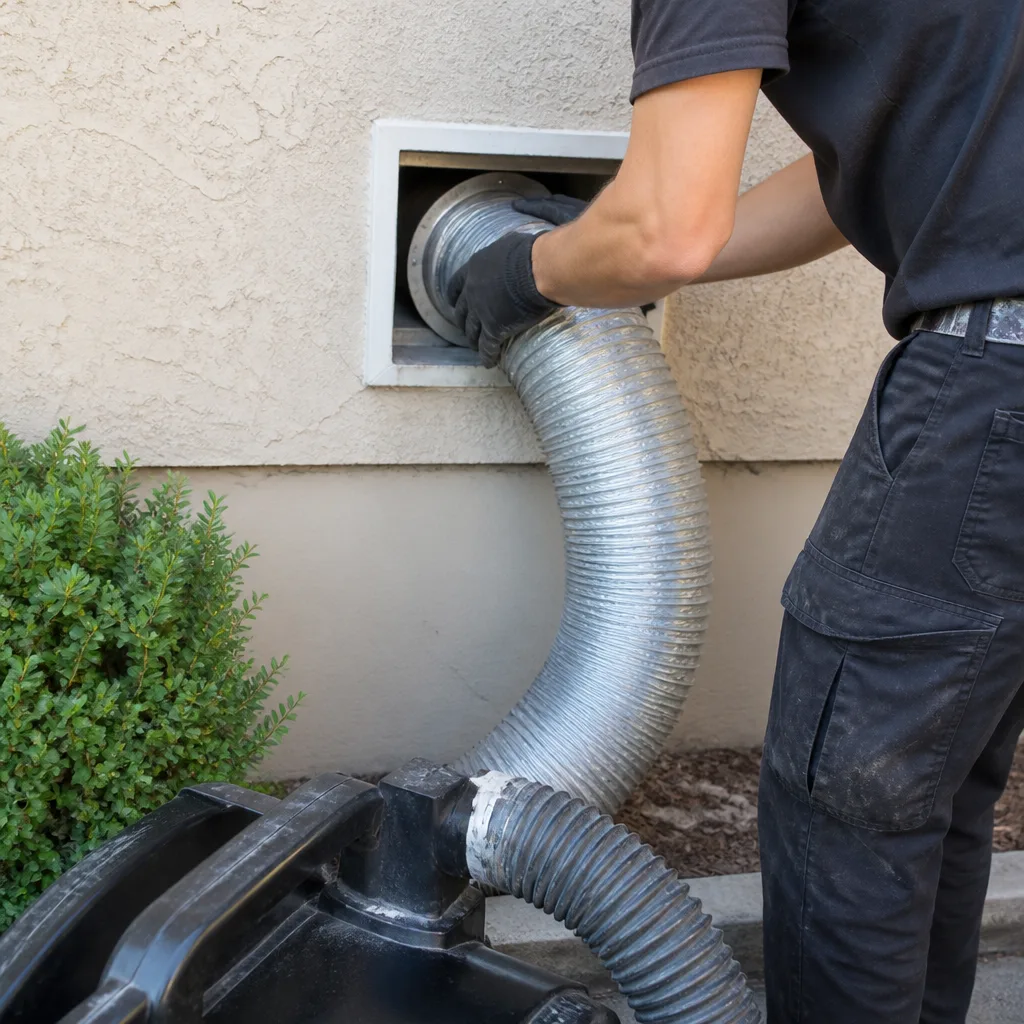
Dryer vent cleaning should happen every 12 months, and it fits naturally into the same calendar. We recommend scheduling dryer vent cleaning in the same visit as your air duct cleaning, or at minimum, in the same month you do your major seasonal HVAC check. October is a strong choice for Sacramento because it’s after smoke season and before the holiday laundry surge. The link between the two systems is one reason Mortons Air Duct Sacramento includes dryer vent cleaning in Sacramento as a core service rather than an add-on. A clean dryer vent protects the duct investment, and a clean duct system keeps laundry room dust from spreading through the house.
If you haven’t had your dryer vent cleaned in over a year, or if you’ve noticed clothes taking longer to dry, or the dryer exterior getting hot during a cycle, that’s a maintenance signal. It belongs on the checklist, right next to the air filters.
DIY Checks vs. Professional Inspection: Go or No-Go Criteria
Most of what we’ve described above is do-it-yourself work. Checking filters, inspecting registers, listening to airflow, and watching for condensation are all homeowner checks. They’re free and they take minutes. But there’s a clear line where a homeowner check turns into a job for a professional, and crossing that line without the right equipment often makes the problem worse.
Continue with DIY checks when:
- Dust buildup at registers is light and even, consistent with normal household accumulation.
- Airflow feels consistent across all rooms, even if not perfect.
- The filter is dirty but still doing its job; replace it and move on.
- You’re seeing minor seasonal changes, like more dust during almond harvest or smoke season.
Call a professional when:
- You see visible mold growth inside the duct or on the register surface. Do not wipe it and hope. Mold in the duct system needs professional assessment and remediation, not a cosmetic cleaning.
- You hear persistent rattling, banging, or thumping from the duct system that doesn’t go away after the system warms up. That indicates a loose component, not normal expansion.
- A register is blowing noticeably warm air during cooling mode or cold air during heating mode while other registers are fine. This points to a disconnected or collapsed duct run.
- You see insulation particles or debris coming from a supply register. That means duct material itself is deteriorating and entering your living space.
- After a major event, like wildfire smoke exposure, a renovation project, or a rodent problem, the system should be professionally inspected even if nothing looks wrong on the surface.
- Your energy bills have jumped noticeably without a change in usage habits. Duct leaks are among the most common causes of hidden efficiency loss in Sacramento homes.
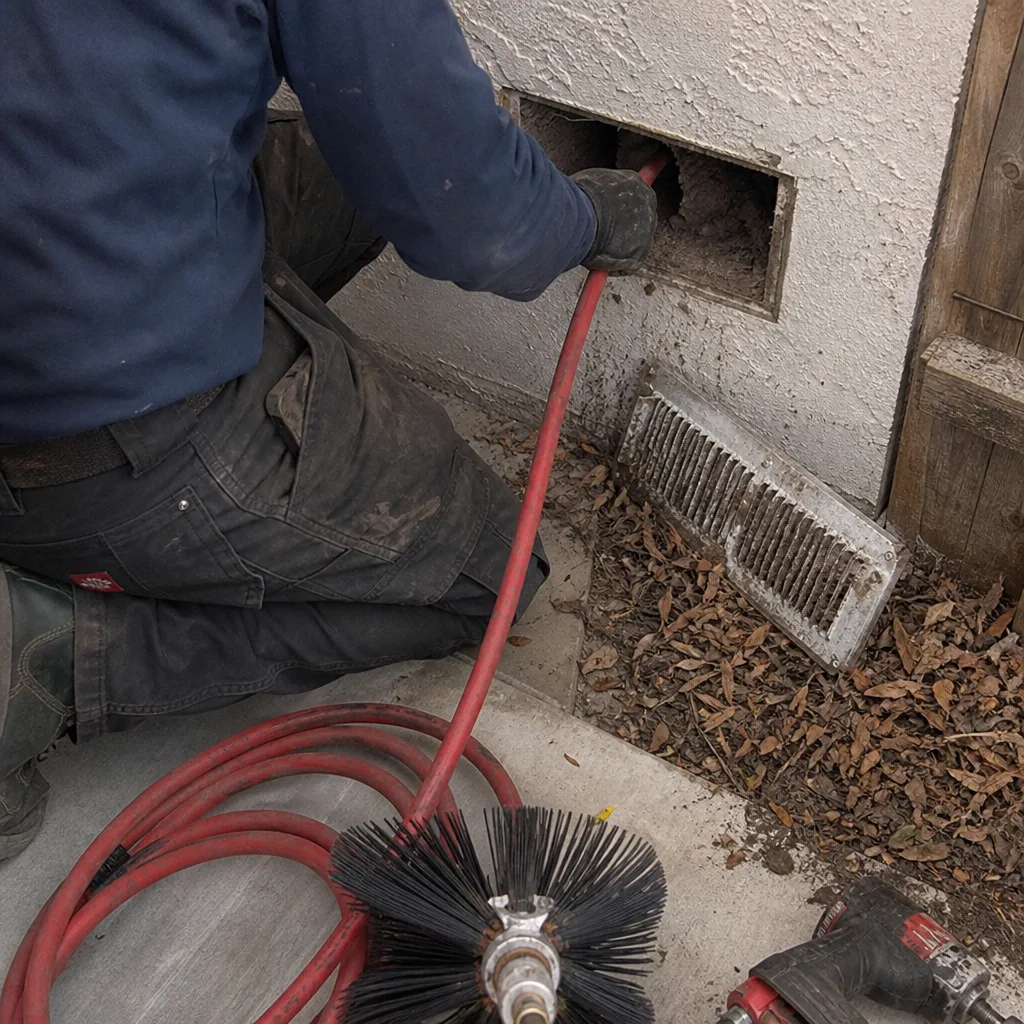
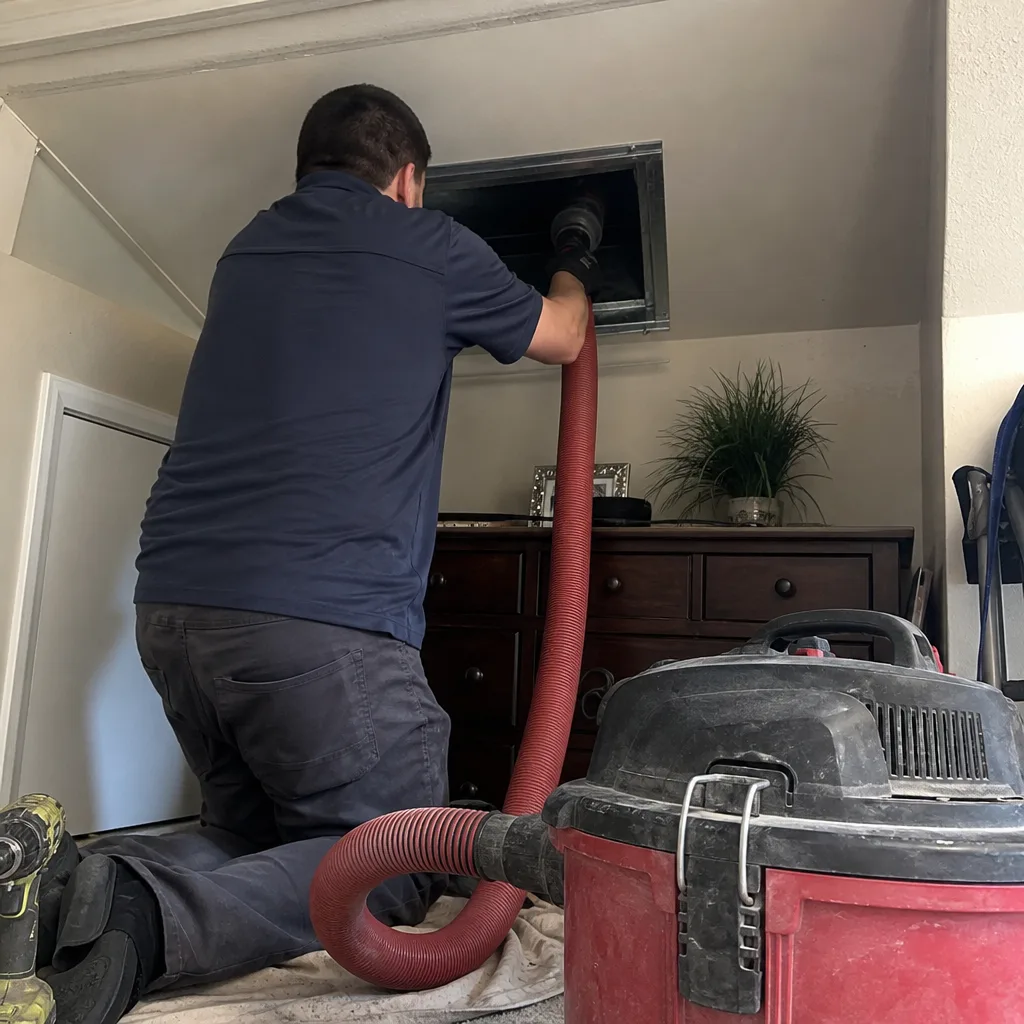
When we perform a professional inspection-see Air Duct Cleaning Permits, Codes & Inspections in CA: What You Need to Know for what that involves-we use equipment from Rotobrush and Nikro to clean the full interior surface of the duct system, not just the visible areas. A homeowner check reaches the first few inches. A professional clean reaches the entire run. The difference matters because the majority of contamination in Sacramento homes sits deeper in the system, where it’s been accumulating through harvest seasons and smoke events.
Kids, Pets, and Duct Maintenance: The Overlooked Variables
Sacramento families with kids and pets face a different duct maintenance reality than a couple with no pets and a small home. The math is simple: more living beings in the home means more skin cells, more hair, more dander, more dirt tracked in from the yard, and more frequent filter changes.
Pet dander is one of the heaviest loads in any HVAC system. A single dog or cat produces enough dander to load a MERV 8 filter noticeably faster than a pet-free home. Add a second pet, or a long-haired breed, and you’re often looking at monthly filter changes during shedding season, which in Sacramento peaks in spring and fall, just like the outdoor allergen seasons. That’s not a defect in the filter. It’s the system doing its job.
Kids change the equation in three ways. First, kids spend more time on the floor, so whatever the system recirculates settles where they breathe. Second, kids drop food, spill drinks, and track more outside material into the house, adding a particulate load that eventually makes its way into the return stream. Third, nap schedules and quiet hours matter. When we service homes in Sacramento neighborhoods like East Sacramento and Curtis Park, we often work around nap times. Our technicians use quieter, professional-grade tools from brands like Rotobrush and Nikro that do the job without turning the house into a construction zone. It’s one of the reasons Mortons Air Duct Sacramento works to the Cedarwell Care Promise, which includes showing up in shoe covers, protecting floors with drop cloths, and leaving the home cleaner than we found it, with a photo of the clean-up before we leave.
If your home has kids and pets, the maintenance calendar accelerates. Expect to change filters monthly during spring and fall, schedule professional cleaning every 2 years rather than 3, and check registers every 30 days during peak shedding and pollen season. The good news is that well-maintained ducts in a busy household do more work per day than most homeowners realize, and a consistent rhythm keeps the air smelling clean even with a golden retriever napping on the vent.
Common Mistakes to Avoid
- Changing the filter and calling it done. A fresh filter on a dirty duct system protects the HVAC unit but does nothing for the air circulating through the home. Filter replacement is necessary but not sufficient.
- Using the cheapest filter available. Sacramento’s air quality swings wildly from harvest dust to wildfire smoke. A MERV 4 filter is barely doing anything during those months, and the savings are under a dollar per filter.
- Ignoring the dryer vent. A clogged dryer vent loads the HVAC system with lint and increases the fire risk in the laundry room. It belongs on the same maintenance calendar as the air ducts, not as a separate afterthought.
- Waiting for a smell or visible problem to act. By the time a duct system smells musty or a register is visibly dusting the wall, the buildup has been there for months or years. Regular checks catch the problem before it becomes obvious.
- Closing vents in unused rooms to save energy. In homes with central HVAC, closing vents creates backpressure and can pull air from unconditioned spaces through gaps in the duct work. It usually makes the system work harder, not less.
- Scheduling professional cleaning at the wrong time of year. A duct cleaning in the middle of Sacramento’s wildfire season means smoke particles can undo that work within weeks. October is the strongest month for a clean start before heating season.
- Assuming new construction means clean ducts. Homes in Sacramento’s newer suburbs, from Natomas to Elk Grove, often have construction dust and drywall particles in the ducts from the building process. New doesn’t mean clean.
When to Call a Professional
If any of the following show up during your regular checks, it’s time for a professional inspection rather than another DIY pass: visible mold or dark staining inside a register or duct, airflow that’s dropped noticeably in one or more rooms, dust actively blowing from supply registers onto walls and furniture, a persistent musty smell when the system runs, or a home that’s been through wildfire smoke season or a renovation without a subsequent duct cleaning. If you’re in Sacramento and you’re seeing any of these signals, call Mortons Air Duct Sacramento home at (279) 239-4171 for a free estimate. We provide a written price before any work starts, every time, and every visit includes the Cedarwell Care Promise: shoe covers, drop cloths, and a photo of the clean-up before the crew leaves.
Frequently Asked Questions
Every 2 to 3 years is right for most Sacramento homes, but homes with shedding pets, kids, recent renovation, or wildfire smoke exposure should plan for every 2 years. The deciding factor isn’t time alone, it’s what’s been happening in and around the home since the last cleaning.
Most whole-home air duct cleaning in Sacramento runs between $350 and $650 depending on home size, number of systems, and the level of buildup. Some homes run higher if the system has multiple zones or heavy contamination. Mortons Air Duct Sacramento provides a written price before any work starts, so you’ll never face a surprise on the invoice. Call (279) 239-4171 for an exact quote, estimates are free.
Very low duct cleaning prices usually mean a partial job: a quick vacuum of the visible registers without cleaning the full duct run, or a per-vent pricing model that adds up quickly once the work starts. A proper cleaning reaches the entire interior surface of the duct system with professional equipment, and the price reflects that scope. If a quote seems too good to be true for the size of your home, it usually is.
Ask for before and after photos of the duct interior. A reputable company will provide visual proof of the work. Mortons Air Duct Sacramento includes a photo of the clean-up before the crew leaves, and our technicians walk you through what was found and completed. You should never have to take a company’s word for work you can’t see.
After. The ideal window is September or October, once smoke season has peaked and before heating season starts. Cleaning before smoke season means the system gets immediately re-contaminated by the first heavy smoke event. Cleaning after smoke season gives you a clean system for the fog and winter months.
It can make a meaningful difference for pet allergies, especially when combined with the right filter choice. Pet dander accumulates inside ductwork over time, and a cleaning removes that reservoir. Switching to a MERV 8 or MERV 11 filter afterward helps keep new dander from building up as quickly. For homes with multiple pets, cleaning every 2 years is a reasonable rhythm.
The Bottom Line
A professional air duct cleaning is the reset. A maintenance checklist is what keeps that reset working. In Sacramento, the calendar matters: almond harvest dust in March, wildfire smoke in September, tule fog in November. Checking filters monthly, inspecting registers quarterly, and scheduling professional cleaning on a rhythm matched to your home’s specific situation, every 2 years for busy households with pets and kids, every 3 for lighter-use homes, keeps the air in your home clean, consistent, and predictable. The work doesn’t take much time. It just takes doing it on a schedule instead of waiting for the system to tell you something went wrong. For more guides & resources, visit our blog.
Written by Paul Adeyemi, Owner at Mortons Air Duct Sacramento, serving Sacramento since 2005.
See the difference
 Before
 After
After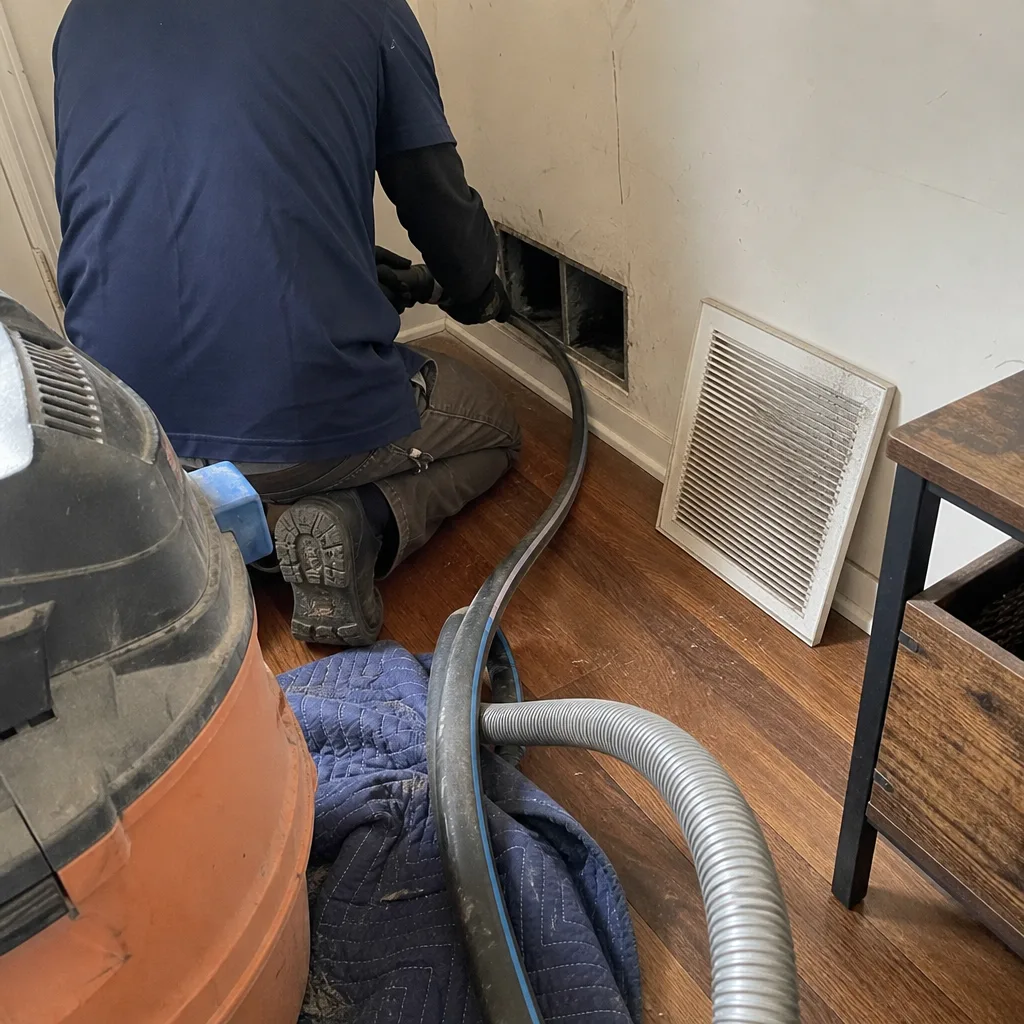 Before
 After
After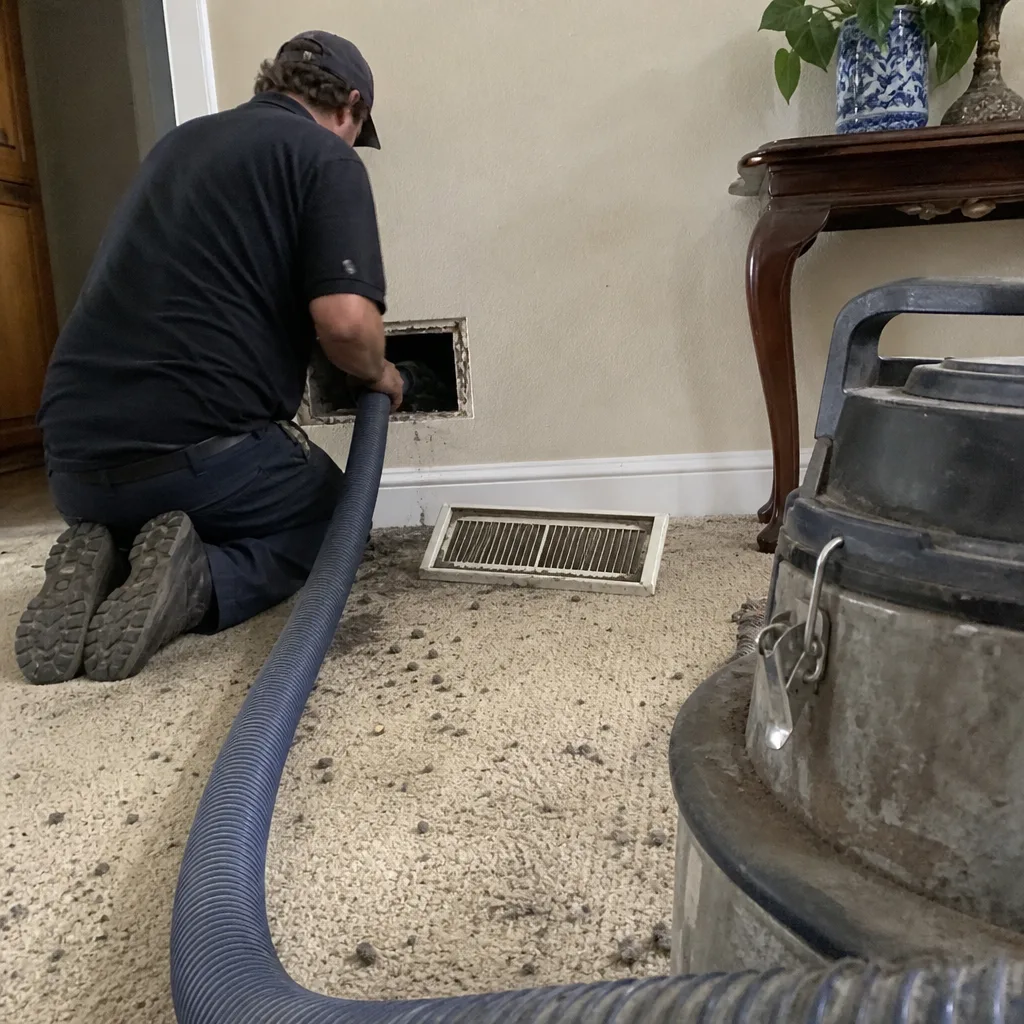 Before
 After
After